
Girls vs Boys and Autism Differences
For years, clinical diagnostic criteria for Autism Spectrum Disorder (ASD) were built almost entirely around observations of boys. This historic bias has left a generation of women, girls, and non-binary individuals flying completely under the diagnostic radar.
But as our understanding of neurodivergence evolves, a crucial question has come to the forefront: Is there really a difference in how autism presents in girls versus boys?
The short answer is yes but perhaps not for the biological reasons you might expect. While the core neurological traits of autism remain the same across the spectrum, the expression of those traits, coupled with social expectations, creates a vastly different experience for girls.
Let’s dive deep into the science, the symptoms, the phenomenon of “masking,” and what this means for families seeking answers including where you can find local support right here in Norfolk.
The Historical Gap: Why Girls Were Left Behind
Historically, autism has been diagnosed in boys at a ratio of roughly 4:1. In those regarded as “high-functioning” (previously referred to as Asperger’s), that ratio has historically stretched as wide as 10:1.
However, modern research suggests this isn’t because girls are inherently less likely to be autistic. Rather, it is because our diagnostic tools were fundamentally designed to spot male-typical behaviours.
When clinical studies on autism began in the mid-20th century, the research cohorts were almost exclusively male. As a result, the checklist of “classic” autism traits was built around boys. If a girl didn’t fit that specific profile, her challenges were often misattributed to anxiety, depression, obsessive-compulsive disorder (OCD), or simply “shyness.”
Key Differences: Girls vs Boys and Autism.
While every neurodivergent individual is entirely unique, clinicians and researchers have identified several broad trends in how ASD presents differently across genders.
1. Social Mimicry and “Masking”
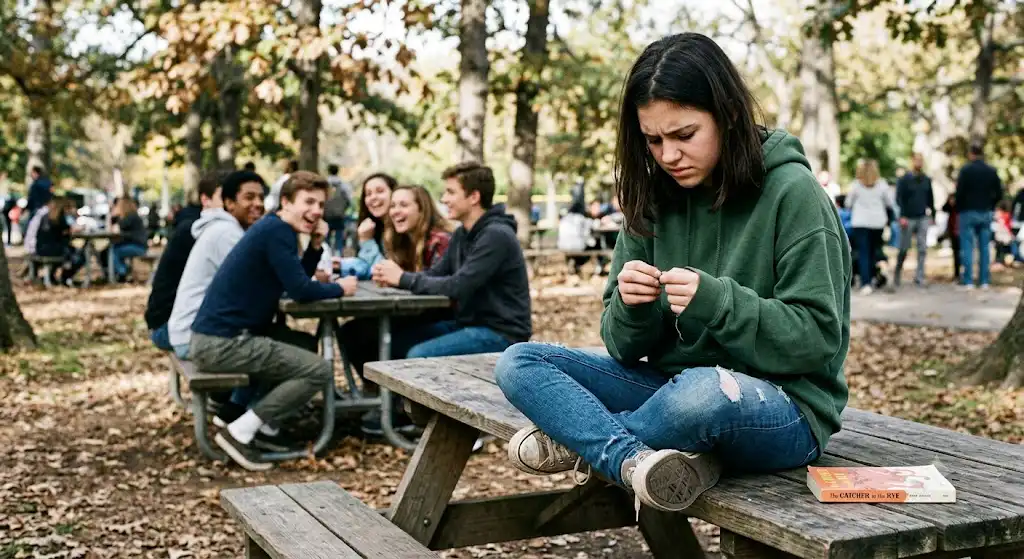
This is arguably the most significant difference. From a very young age, girls are often socialized to be highly social, cooperative, and intuitive to others’ feelings. Autistic girls often use their high cognitive abilities to actively study, copy, and practice social interactions.
- In Girls: An autistic girl might spend hours observing her peers to learn when to laugh, what gestures to use, and how to maintain “correct” eye contact. This exhausting process is known as social masking.
- In Boys: Autistic boys are often less inclined (or feel less social pressure) to hide their social difficulties. They may simply opt out of social situations that feel overwhelming, making their differences much more visible to teachers and parents.
2. The Nature of “Special Interests”
Intense, highly focused interests are a hallmark of autism. However, the subject of these interests often determines whether they are flagged as a symptom or dismissed as a typical hobby.
- In Boys: Special interests often lean toward the mechanical, technical, or highly categorized such as train systems, statistics, coding, or historical dates. These stand out quickly to educators as “unusual” for their age.
- In Girls: Special interests often align closely with those of their neurotypical peers. An autistic girl might be passionately obsessed with horses, a specific book series, celebrity culture, K-pop, or creative writing. Because these interests are socially common, the intensity of the interest is overlooked. She isn’t seen as autistic; she is just seen as an incredibly dedicated fan.
3. Coping with Sensory Overload
Sensory processing differences are common to all autistic individuals, but how boys and girls react to overwhelm can look very different.
- In Boys: Sensory overload is more likely to result in “externalizing” behaviours. This might look like physical hyperactivity, outbursts, or meltdowns. In a classroom environment, these behaviours disrupt the peace and get noticed quickly, triggering a referral for support.
- In Girls: Overload is more commonly “internalized.” A girl may quieten down, withdraw entirely, or experience a “shutdown” rather than a meltdown. She might hold her anxiety together perfectly all day at school, only to collapse in tears or have a severe meltdown the moment she reaches the safety of home (a phenomenon known as the “coke bottle effect”).
The Hidden Cost of Autism Masking in Girls
Because many girls successfully mask their difficulties, they often pay a heavy cognitive and emotional price.
Imagine acting in a play where everyone else has been given the script, but you have to improvise your lines while pretending you know exactly what is happening. Doing this for sixteen hours a day, every day, is incredibly exhausting.
The “Coke Bottle” Effect
Autistic girls often spend their school day keeping a tight lid on their sensory and social struggles to “fit in.” Like shaking a bottle of cola, the pressure builds up all day. The moment they walk through the front door at home their safe space the lid comes off, resulting in intense emotional exhaustion, meltdowns, or extreme withdrawal.
This constant effort to blend in often leads to:
- Severe chronic fatigue and burnout.
- High levels of anxiety and depression, especially during the transition to secondary school (ages 11–13) when social dynamics become vastly more complex.
- Low self-esteem, arising from the feeling that they must hide their true selves to be accepted.
- Late diagnosis (often in late teens or adulthood), after years of feeling “different” without understanding why.
Girls vs. Boys Autism Checklist: A Side-by-Side Comparison
To help make these differences clearer, here is a breakdown of how identical underlying autistic traits can manifest differently in daily life:
| Core Autistic Trait | Typical Presentation in Boys | Typical Presentation in Girls |
| Social Interaction | May actively avoid peer group socialization; struggles with back-and-forth conversation. | Often has one or two close friends; uses mimicry to “blend in” with larger groups. |
| Communication | Speech may be highly literal; may struggle with non-verbal cues (like gestures or tone). | May speak expressively and use appropriate gestures, but copy them directly from movies or peers. |
| Special Interests | Often focused on objects, facts, lists, or mechanical systems. | Often focused on people, animals, literature, or psychology (e.g., horses, fantasy worlds). |
| Sensory Sensitivities | May react outwardly to noises, textures, or lights (e.g., covering ears, running away). | May quietly endure sensory discomfort, leading to internal anxiety, stomach aches, or headaches. |
| Anxiety Response | Outward meltdowns, irritability, or aggressive frustration. | Internalized shutdowns, mutism, social withdrawal, or perfectionism. |
Moving Beyond the Binary
While comparing girls and boys is a helpful framework for understanding why so many females are missed, it is important to remember that autism does not respect gender boundaries.
Many boys present with quiet, internalized, “female-typical” profiles, and many girls exhibit highly externalized, “male-typical” traits. Furthermore, there is a significantly higher prevalence of gender diversity within the autistic community than in the general population.
Ultimately, the goal is not to divide autism into “girl autism” and “boy autism,” but rather to expand our diagnostic lens to recognize all the quiet, creative, and masked ways neurodivergence can show up.
Where to Find Help: Norfolk-Based ASD Support & Resources
If you are a parent, carer, or autistic individual living in Norfolk, navigating the pathway to an assessment or finding ongoing support can feel incredibly overwhelming. Fortunately, our local community is home to some incredible organizations dedicated to helping you navigate this journey.
Here are some of the key Norfolk-based charities and support networks available:
1. ASD Helping Hands
- What they do: A fantastic, dedicated Norfolk-based charity that provides practical support, information, and training for autistic children, young people, adults, and their families.
- Services offered: They run friendly support and social groups across the county, provide downloadable information booklets, offer family-focused support programmes (like their Families Together initiative), and offer a dedicated Autism Information and Advice Service.
- Website: asdhelpinghands.org
2. Autism Anglia
- What they do: Operating across East Anglia, this independent charity is a cornerstone of support for autistic individuals of all ages.
- Services offered: In Norfolk, they operate the Norfolk Opportunities Centre in Dereham (providing tailored day opportunities and life-skills training for adults). They also offer an Autism Alert Card scheme (supported by Norfolk Constabulary) and run educational support services.
- Website: autism-anglia.org.uk
3. Family Action: Norfolk and Waveney Autism/ADHD Support Service
- What they do: This service is specifically commissioned to support parents and carers of children awaiting a neurodevelopmental assessment or those who have recently received a diagnosis.
- Services offered: They run the highly praised, free Plan Bee course a multi-week programme helping parents understand their child’s neurodivergence and build practical parenting strategies. They also offer targeted support courses like the Puffin Programme.
- Website: family-action.org.uk
4. Norfolk Autism Partnership
- What they do: A collaboration between autistic people, carers, service providers, and local government working together to make Norfolk a genuinely autism-friendly county.
- Services offered: Their website features a comprehensive Norfolk Autism Directory (a one-stop shop for local services) and a “What’s On” guide for local inclusive events.
- Website: norfolkautismpartnership.org.uk
Conclusion: Empathy, Education, and Early Action
Whether your child is a boy showing classic external signs of ASD, or a girl working overtime to mask her daily struggles, the key to helping them thrive is the same: validation and understanding.
Recognizing that autism looks different in everyone and that girls have been historically misunderstood is the first step toward getting young people the support they deserve. If you recognize these patterns of masking, sensory overload, or deep, internal anxiety in your child, trust your instincts. Reach out to one of Norfolk’s fantastic local support organizations, speak to your school’s SENCO (Special Educational Needs Coordinator), and begin the conversation.
A diagnosis isn’t about putting someone in a box; it’s about giving them the key to understand themselves, build their confidence, and live a life without limits.