

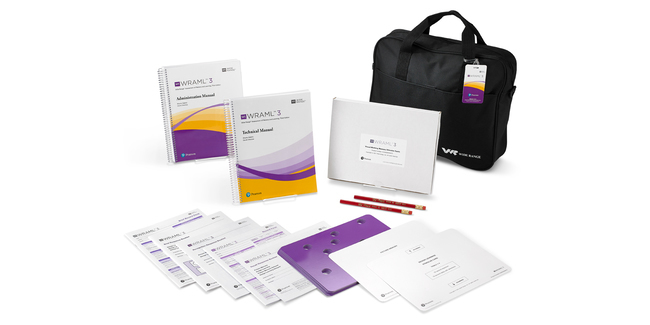
The Memory Maze: A Review of the WRAML 3 in Dyslexia Assessment
This review explores the structure and utility of the WRAML 3, specifically through the lens of dyslexia diagnosis and intervention. We will examine how its 17-subtest battery provides the granular data necessary to move beyond a simple “reading difficulty” label toward a comprehensive cognitive profile.
Why Memory Matters in Dyslexia
Dyslexia is widely recognized as a phonological processing disorder, but its relationship with memory—particularly verbal working memory—is inseparable. Students with dyslexia often struggle to hold onto the sounds of a word while blending them (decoding) or to remember the beginning of a sentence by the time they reach the end (comprehension).
The WRAML 3, authored by Wayne Adams and David Sheslow (2021), is uniquely positioned to map these specific deficits. Unlike general IQ tests that may only touch upon memory, the WRAML 3 provides a deep dive into the mechanics of learning across a massive age range (5 to 90 years). For a practitioner, this means the ability to track a child’s memory development from early literacy stages all the way through university-level demands.
The Architecture of the WRAML 3: 17 Subtests
The WRAML 3 is organized into three functional categories: Immediate Recall, Delayed Recall/Recognition/Working Memory, and Additional Subtests. Within this structure, six Core Subtests form the foundation of the assessment:
- Story Memory: Immediate verbal memory using narratives.
- Verbal Learning: Learning a list of words over multiple trials.
- Design Learning: Learning geometric shapes (non-verbal).
- Picture Memory: Visual immediate memory.
- Finger Windows: Attention and motor sequence memory.
- Number Letter: Attention, concentration, and verbal sequencing.
The “Learning Slope” Advantage
One of the most powerful features for dyslexia specialists is the “Learning” subtests (Verbal and Design Learning). Instead of a “one-and-done” recall task, these subtests measure the learning curve. For a student with dyslexia, we can see if they require more repetitions than their peers to “anchor” information. This shift from static measurement to dynamic assessment is vital for creating realistic Classroom Support Plans (CSPs).
Decoding the WRAML 3 Indices: A Dyslexia Perspective
The WRAML 3 converts subtest performance into seven primary composite index scores. For a dyslexia-focused evaluation, three of these are particularly revelatory:
1. Verbal Immediate vs. Visual Immediate Memory
This comparison is the “bread and butter” of dyslexia profiling. Many individuals with dyslexia demonstrate a significant discrepancy, where Visual Immediate Memory (remembering designs or pictures) is a relative strength, while Verbal Immediate Memory (remembering stories or word lists) is a significant weakness. Identifying this allows psychologists to recommend “Visual Scaffolding”—using mind maps and infographics to bypass the verbal bottleneck.
2. The Working Memory Index (WMI)
The inclusion of a dedicated Working Memory Index is a game-changer. Working memory is the “mental workspace” where we manipulate information. In dyslexia, this workspace is often “crowded” or small. The WRAML 3’s tasks, such as recalling items in a specific category (e.g., animals first), provide a quantitative measure of this capacity. If a student has a low WMI, no amount of traditional phonics instruction will work unless the cognitive load of the lesson is reduced.
3. Verbal Recognition Index
Often, a student with dyslexia may fail a Recall task (e.g., “Tell me the story back”) but excel at a Recognition task (e.g., “Did the boy have a red or blue hat?”). This distinction is crucial. It tells the educator that the information is in the brain; the student just lacks the retrieval “retrieval hooks” to pull it out. This leads to recommendations for multiple-choice testing or prompt-based assessments in school.
The Power of Process Scores
The WRAML 3 moves beyond the “what” and into the “how” through Process Scores. These scores quantify qualitative observations. For example, does the student make “commission errors” (adding information that wasn’t there)? In a dyslexia context, this might indicate a student who is over-relying on context clues to compensate for poor verbal encoding.
By quantifying error patterns and organizational strategies, the WRAML 3 allows practitioners to see if a student is using a fragmented approach to learning. This insight is essential for occupational therapists and specialist teachers who need to teach the student how to organize their thoughts.
Clinical Utility: From Scores to Strategies
The true value of the WRAML 3 lies in its Ecological Validity. Subtests like Story Memory mimic “real-life school tasks.” When a student struggles here, it translates directly to their inability to follow a teacher’s multi-step verbal instructions in a noisy classroom.
Key Diagnostic Insights for Dyslexia:
- Encoding vs. Consolidation: If a student scores well on Immediate Recall but poorly on Delayed Recall (20-30 minutes later), the issue isn’t “not paying attention”—it’s a failure to consolidate information into long-term memory. This suggests the need for frequent “over-learning” and spaced repetition.
- Modality Strengths: By isolating visual and verbal channels, the WRAML 3 can prove that a student is not “low ability,” but rather “differently wired,” requiring multi-sensory instruction (Orton-Gillingham approaches, etc.).
Critical Considerations and Limitations
While the WRAML 3 is a gold-standard tool, practitioners must navigate a few hurdles:
- Attention/Concentration Index Reliability: The manual notes that this specific index has weaker reliability than others. Clinicians should never diagnose an attentional disorder (like ADHD) based solely on this score; it must be triangulated with other data.
- Cultural Nuance: As a US-standardized test, minor “Americanisms” in story content may occasionally trip up UK or international students.
- Cost and Access: Access is restricted to qualified psychologists, ensuring that these complex results are interpreted with the necessary clinical nuance, though this does limit its use in some school-based settings.
Conclusion: A Vital Tool for the Dyslexia Toolkit
The WRAML 3 is more than just a memory test; it is a diagnostic lens that brings the hidden cognitive struggles of dyslexia into sharp focus. By moving away from a single “memory score” and toward a nuanced profile of visual vs. verbal, immediate vs. delayed, and recall vs. recognition, it provides a roadmap for intervention.
For the student with dyslexia, a WRAML 3 assessment can be the difference between being labeled “forgetful” and being understood as someone with a specific working memory profile. In the hands of a skilled psychologist, this tool doesn’t just measure memory—it unlocks the potential for more effective, evidence-based learning support.
Key Takeaway: If a student’s reading progress has plateaued despite intervention, the WRAML 3’s Working Memory and Learning Slope analyses may provide the “missing piece” of the diagnostic puzzle.