

A Comprehensive Guide to SASC Standards for Remote SpLD Assessment
In response, the Specific Learning Difficulties Assessment Standards Committee (SASC) issued its definitive guidance, “Remote Assessment in the Identification of Specific Learning Difficulties.” This document is the roadmap for assessors, ensuring that a diagnosis of Dyslexia, Dyspraxia, or ADHD remains robust, ethical, and legally defensible when conducted online.
The Core Mandate: Why Standards Matter for Remote Testing
The primary driver behind the SASC guidance is the maintenance of professional integrity and psychometric validity. When an assessor and a client are in different locations, the traditional “standardization” of a test—the specific conditions under which the test was originally designed to be taken—is inherently at risk.
The SASC “Headline Messages” place the burden of proof on the assessor. It is no longer enough to simply deliver a test; the professional must prove that the remote environment did not introduce:
- Error: Technical glitches or misunderstandings due to audio lag.
- Bias: Differences in how a student responds to a screen versus a person.
- Compromised Standardization: Changes in the way materials are handled that might make the final score inaccurate.
This rigor ensures that diagnostic reports remain “fit for purpose,” particularly for high-stakes outcomes like Disabled Students’ Allowance (DSA) or workplace accommodations.
Ethical Frameworks and Digital Data Security
One of the most significant hurdles in remote assessment is the transmission of sensitive data. SpLD assessments involve deep dives into a person’s cognitive strengths and weaknesses. In a digital world, this data is vulnerable.
GDPR and Platform Security
SASC mandates that all remote assessments must comply with General Data Protection Regulation (GDPR). Assessors cannot simply use any video calling software; they must utilize platforms that meet high-level security standards to prevent data breaches.
Protecting Test Integrity
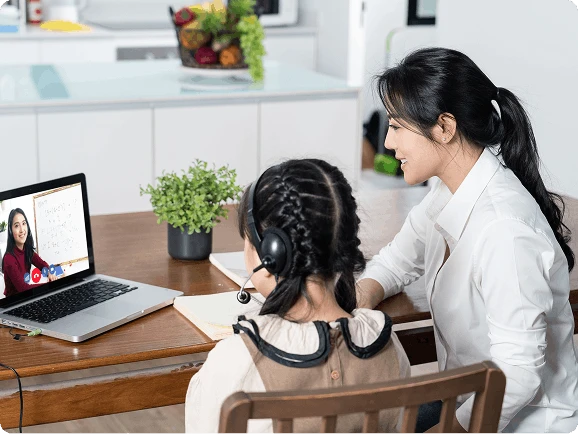
A unique ethical challenge in remote testing is the “Facilitator” (often a parent or carer). Because the assessor cannot physically hand over a booklet, they must rely on a third party. The SASC protocol for this is strict:
- Sealed Materials: If physical papers are mailed to the home, they must remain sealed until the moment the session begins—and must be opened on camera.
- No Recording: SASC is unequivocal—no sessions should be recorded, and no screenshots of testing materials should be taken. This prevents the unauthorized spread of copyrighted psychometric tools, which would render the tests useless if the “answers” became public.
Creating the “Virtual Clinic”: Controlling the Environment
A standard assessment room is quiet, well-lit, and neutral. Replicating this in a family home requires meticulous planning. SASC outlines specific environmental requirements to ensure the results aren’t skewed by external factors.
Technical and Physical Prerequisites
- Connectivity and Hardware: A stable internet connection and a screen large enough to display test stimuli clearly are non-negotiable.
- Camera Positioning: The assessor must have a clear, uninterrupted view of the child. This often requires a “dual-camera” setup or specific positioning to see both the child’s face and their workspace.
- Standard Materials: Even in a digital world, some things remain analog. Students must have a pad of lined paper, pens, and their usual vision supports (like colored overlays or glasses).
| Requirement | Remote Standard | Purpose |
| Lighting | Bright, non-glare | To see facial expressions and written work clearly. |
| Privacy | Room must be private | To prevent coaching or distractions from family members. |
| Audio | High-quality headset/mic | To ensure phonological processing tasks are heard accurately. |
Psychometric Integrity: Not Every Test Works Online
Perhaps the most critical section of the SASC guidance involves Test Availability and Use. Just because a test exists doesn’t mean it can be used via Zoom.
Psychometric tests are normalized based on specific delivery methods. If a subtest requires a student to physically manipulate blocks (like in the WISC-V), converting that to a “point-and-click” task changes what the test is actually measuring. SASC provides an Approved List of Tests (Appendix 1) that identifies exactly which tools are sanctioned for remote use.
Assessors must also distinguish between a Full Diagnostic Assessment and an Evaluation of Need (EON). In cases where a full assessment isn’t possible due to remote constraints, an EON provides a temporary bridge, often requiring a “top-up” assessment later to confirm the diagnosis.
The Vital Link: Remote Standards and Dyslexia Screening
When we discuss SpLD assessment, Dyslexia Screening is often the first point of contact for many families and schools. Understanding the SASC standards is vital for interpreting the results of these screenings.
From Screening to Diagnosis
A “screening” is not a formal diagnosis; it is a way to identify “at-risk” markers. However, as more schools move toward digital screening tools, the SASC principles of environment and validity become even more relevant.
- Reliability of Early Markers: Remote screening for dyslexia often focuses on phonological awareness and rapid naming. If the audio quality is poor (a violation of SASC technical standards), a student might “fail” a screening not because of dyslexia, but because they couldn’t hear the phonemes correctly.
- The Role of the Facilitator: In dyslexia screening, the facilitator must be “invisible.” The SASC guidance on preventing coaching is essential here. If a parent prompts a child during a remote screening, the early intervention data becomes invalid, potentially delaying the support the child actually needs.
- Consistency in Assessment: By following SASC standards, the transition from a remote screening to a remote full diagnostic assessment is seamless. It ensures that the data collected at the screening stage is gathered with the same professional rigor as the final diagnosis.
The Future of Remote SpLD Assessment
The SASC guidance is more than just a reaction to a crisis; it is a blueprint for the future. By establishing a comprehensive ethical, environmental, and psychometric framework, SASC has democratized access to assessments. Individuals in rural areas or those with mobility issues can now access top-tier diagnostic services without the barrier of travel.
The success of these standards relies on the assessor’s due diligence. When protocols are followed—from the sealing of envelopes to the checking of screen resolutions—remote assessment is not a “second-best” option; it is a valid, reliable, and equitable method of ensuring every learner gets the support they deserve.
Key Takeaways for Parents and Educators
- Check the Tools: Ensure your assessor is using SASC-approved tests for remote delivery.
- Prepare the Space: A quiet, well-lit room is just as important as the internet speed.
- Respect the Materials: Never record or photograph the testing process to protect the integrity of the science.
By adhering to these high standards, we ensure that the “distance” in remote assessment never compromises the “depth” of the diagnosis.