

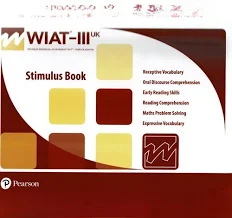
The Role of the WIAT-IIIUK in SpLD Assessments
The Wechsler Individual Achievement Test, 3rd Edition UK (WIAT-IIIUK) is the “gold standard” for this second stage. Published by Pearson (2017), this instrument is a sophisticated diagnostic suite used by specialist assessors to confirm an SpLD diagnosis and support applications for Disabled Students’ Allowance (DSA) and Access Arrangements (AA).
The Assessment Pathway: Screening to Diagnosis
It is important to understand where the WIAT-IIIUK fits within the professional framework of dyslexia testing.
Step 1: Dyslexia Screening
A screening is a preliminary “check” designed to identify individuals who are “at risk” of dyslexia. It is not a diagnosis.
- Purpose: To decide if further testing is needed.
- Tools: Often computer-based or checklist-based.
- Focus: Screening looks for indicators such as poor phonological processing, rapid naming difficulties, or discrepancies in vocabulary versus spelling.
Step 2: The Diagnostic Assessment
If a screening returns a “positive” result, a full diagnostic assessment is conducted. This is where the WIAT-IIIUK comes in.
- Purpose: To provide a formal diagnosis and a detailed profile of strengths and weaknesses.
- Tools: Standardised, individually administered batteries like the WIAT-IIIUK and cognitive tests (e.g., the WAIS-IV).
- Focus: Detailed measurement of academic attainment compared to age-related norms.
What is the WIAT-IIIUK?
The WIAT-IIIUK is an individually administered battery designed to measure the achievement of individuals aged 4:0 to 25:11 years. While the US version extends to age 50, the UK edition was specifically normed to support the transition from early childhood through to the end of Higher Education.
It consists of 16 distinct subtests that cover the four core pillars of academic achievement:
- Reading
- Written Expression
- Mathematics
- Oral Language
The Role of WIAT-IIIUK in Diagnostic Assessment
During a diagnostic assessment, the assessor uses the WIAT-IIIUK to gather objective, standardised data on the individual’s academic skills.
1. Accuracy and Decoding
The Word Reading and Pseudoword Decoding subtests are essential for identifying the “mechanical” deficits of dyslexia. By testing “nonsense” words (Pseudowords), the assessor can determine if a student has mastered phonetic rules or is simply relying on a memory of sight words.
2. Analysis of Fluency
One of the most significant updates in the 3rd edition is the Oral Reading Fluency subtest. In a diagnostic context, it isn’t enough to know if a student can read; we need to know how they read. This subtest measures speed and accuracy, helping assessors differentiate between a student who is slow but accurate and one who is fast but prone to frequent errors.
3. Written Expression
Dyslexia and other SpLDs often manifest in written output. The Spelling, Sentence Composition, and Essay Composition subtests provide a standardised way to measure how phonological or processing deficits impact a student’s ability to communicate ideas in writing.
Key Enhancements Over the WIAT-IIUK
The WIAT-IIIUK offers several modernized advantages that make it a more reliable diagnostic tool than its predecessors.
Co-Norming with Cognitive Measures
The WIAT-IIIUK is co-normed with the latest Wechsler intelligence scales (WISC-VUK, WPPSI-IV, and WAIS-IV).
Why this matters: This synchronous norming allows for more statistically reliable Discrepancy Analysis. Assessors can use methods like the Pattern of Strengths and Weaknesses (PSW) to see if a student’s academic struggles are significantly lower than their cognitive potential—a key requirement for a formal SpLD diagnosis.
Cultural Adaptation
The UK version features adaptations in language, spelling (e.g., “colour” instead of “color”), and artwork to ensure the content is culturally relevant for UK-based students, reducing “test bias.”
Crucial Considerations for Higher Education (HE) Assessors
While the WIAT-IIIUK is a powerhouse, it is not without its limitations, particularly for those assessing university students.
1. The Missing “Silent Reading” Measure
In Higher Education, students primarily read silently. However, the WIAT-IIIUK does not include a standardised silent reading speed measure.
- The Problem: The Reading Comprehension subtest is untimed.
- The Solution: For a full diagnostic profile in HE, assessors must supplement the WIAT-IIIUK with other tests (such as the TOSWRF-2) to quantify silent reading efficiency for exam accommodations like “Extra Time.”
2. The “Favourite Game” Essay Dilemma
The Essay Composition subtest topic—”Write about your favourite game”—is often viewed as inappropriate for HE students. Additionally, the norms for writing speed in this subtest can be less sensitive than dedicated measures like the DASH (Detailed Assessment of Speed of Handwriting), which is often preferred for DSA applications.
3. Scoring Complexity
The WIAT-IIIUK requires a meticulous approach to scoring, involving Weighted Raw Scores. Assessors must follow a multi-step process to derive final standard scores for Reading Comprehension and Oral Reading Fluency, which requires high levels of accuracy.
Mapping the Subtests: A Quick Reference
| Domain | Subtest | Diagnostic Value |
| Reading | Word Reading | Core accuracy measure for sight words. |
| Reading | Pseudoword Decoding | Essential for identifying phonic decoding deficits. |
| Reading | Oral Reading Fluency | Vital for profiling reading “stamina” and speed. |
| Writing | Spelling | Identifies phonological encoding difficulties. |
| Writing | Sentence Composition | Measures the ability to apply grammar in context. |
| Oral Language | Listening Comprehension | Helps determine if a student’s understanding is better aurally. |
How to Access the WIAT-IIIUK
As a restricted professional instrument, the WIAT-IIIUK cannot be bought by the general public. It is sold primarily through Pearson Clinical UK and approved distributors like Dyslexia Action Shop or Ann Arbor Publishers.
1. Qualification Requirements
The WIAT-IIIUK is a Level B (or CL1) qualification test. This means it is restricted to:
- Psychologists: Health and Care Professions Council (HCPC) registered Practitioner Psychologists or Chartered Psychologists.
- Specialist Teachers: Professionals who hold a recognized postgraduate qualification in SpLD (such as an AMBDA or an Assessment Practising Certificate – APC).
- Supervised Users: Those without these specific credentials may sometimes administer and score the test, but only under the direct supervision of a qualified psychologist or specialist.
2. Approximate Pricing
Prices can fluctuate, but based on current 2026 market rates, the following serves as a guide (excluding VAT):
- Complete Paper Kit: Approximately £840 – £850. This includes the manual, stimulus book, oral reading fluency book, cards, and a starter pack of 25 record forms/response booklets.
- Teacher-Specific Kits: Often available for around £480 – £530 (tailored for educational settings).
- Digital Version (Q-interactive): This requires a subscription (approx. £120 – £230 per year) plus a per-usage fee (roughly £2.10 per subtest). This version requires two iPads to run.
- Replacement Forms: A pack of 25 Record Forms typically costs between £100 – £135.
Conclusion: The Professional Standard for Diagnosis
The WIAT-IIIUK is an authoritative and sophisticated measure of academic achievement. While a screening provides the first “clue” that a student may have dyslexia, the WIAT-IIIUK provides the clinical evidence required for a formal diagnosis.
Its extended UK norms up to age 25:11 and co-norming with cognitive scales make it a vital component of the SpLD assessment battery in UK Higher Education. By leveraging its strengths—such as detailed fluency analysis—while strategically addressing its limitations with supplementary tests, assessors can provide a clear, evidence-based roadmap for student support.