

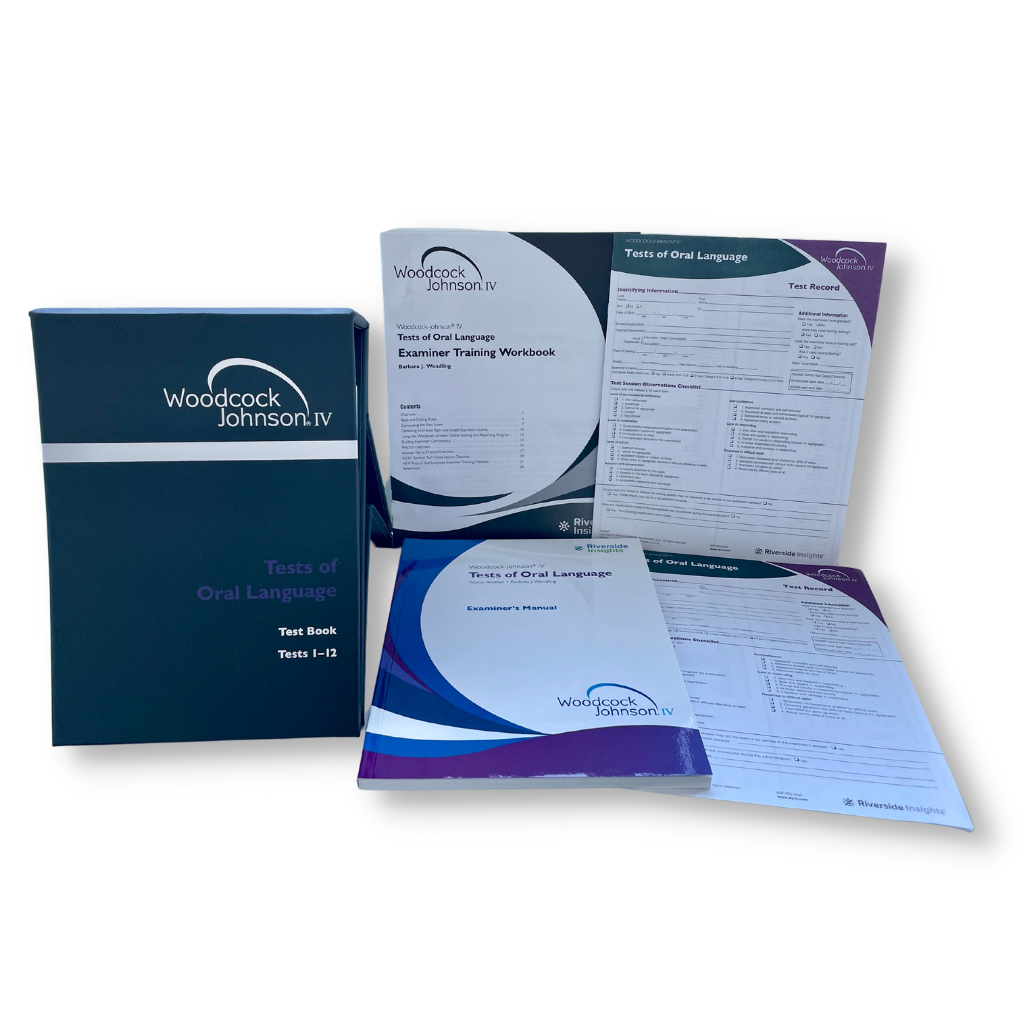
Woodcock-Johnson IV (WJ IV) Tests of Oral Language
The Woodcock-Johnson IV (WJ IV) Tests of Oral Language (OL) has emerged as a powerhouse in this field. Rooted in the prestigious Cattell-Horn-Carroll (CHC) theory of cognitive abilities, this battery—authored by Nancy Mather and Barbara J. Wendling—offers a deep dive into the linguistic foundations that often lie at the heart of dyslexic profiles.
However, as the 2023 SASC (SpLD Assessment Standards Committee) review highlights, using this US-normed tool in a UK context requires a blend of clinical skill and cultural caution.
Why Oral Language Matters in Dyslexia Diagnosis
Dyslexia is widely defined as a phonological processing deficit. But how do we distinguish between a “simple” reading difficulty and a broader language disorder? This is where the WJ IV OL becomes indispensable.
In a diagnostic assessment, we look for discrepancies. If an individual has high oral language ability (vocabulary, comprehension, expression) but low reading and spelling scores, it provides strong evidence of dyslexia. Conversely, if oral language is also low, the practitioner must consider whether the reading difficulties are symptomatic of a Developmental Language Disorder (DLD) or a broader learning profile.
The WJ IV OL provides the data necessary to make these distinctions with scientific rigour.
Inside the Battery: Key Clusters for Dyslexia
The WJ IV OL consists of 12 tests (9 in English), which combine to form six “clusters.” For dyslexia specialists, three of these are particularly critical:
1. Phonetic Coding (Segmentation + Sound Blending)
This is the “engine room” of literacy. Segmentation (breaking words into sounds) and Sound Blending (synthesizing sounds into words) measure the core phonological skills required for decoding. While many assessors use the CTOPP-2, the WJ IV OL offers a robust alternative that integrates seamlessly into a wider cognitive profile.
2. Speed of Lexical Access (Rapid Picture Naming + Retrieval Fluency)
Dyslexia often manifests as “word-finding” difficulties. This cluster measures how quickly a person can retrieve names for objects from their long-term memory. A low score here often correlates with slow reading fluency and “tip-of-the-tongue” moments in conversation.
3. Listening Comprehension
This cluster helps isolate whether a student’s failure to understand a text is due to poor decoding (they can’t read the words) or poor linguistic comprehension (they don’t understand the words when spoken). If they score well here but poorly on reading comprehension, the “dyslexia” diagnosis is further solidified.
The Strengths: Why Assessors Choose the WJ IV OL
The SASC guidance identifies several areas where the WJ IV OL outshines competitors like the WIAT-III or WRAT-5:
- Breadth and Depth: It explores oral language more comprehensively than almost any other achievement battery.
- The “Universal” Age Range: Normed for ages 2 to 90, it is one of the few tools that can be used for early intervention screening and adult workplace assessments alike.
- Technical Rigour: With reliability scores ranging from 0.70 to 0.94, practitioners can trust that the data is consistent and scientifically sound.
- Qualitative Insight: The inclusion of a Session Observation Checklist allows assessors to record vital “soft” data—such as a student’s self-confidence, attention span, and conversational ease—which are essential for a holistic dyslexia report.
Critical Considerations: The “UK Gap”
While the WJ IV OL is technically brilliant, it was normed on a US population. For UK-based practitioners and students, this presents a few “speed bumps” that must be managed.
1. The Americanism Hurdle
The SASC review warns of culturally specific items. In subtests like Picture Vocabulary or Oral Comprehension, a UK student might lose marks not because they lack the language skill, but because they don’t recognise a “faucet” or “sidewalk.”
Practitioner Tip: Assessors must remain vigilant. If a student misses a mark due to a cultural difference, this must be noted in the qualitative analysis of the report to ensure the dyslexia diagnosis remains equitable.
2. Physical Design Flaws
Ironically, a test designed to measure “speed of access” is hampered by its physical “Easel” design. The SASC notes that the pages can be difficult to turn and may “get stuck” during timed tests like Rapid Picture Naming. To combat this, many professionals are moving toward the digital version for a smoother administration experience.
3. Rapid Naming: Pictures vs. Symbols
Unlike the CTOPP-2, which uses letters and digits, the WJ IV OL uses pictures for its rapid naming tasks. Research suggests that naming symbols (letters) is often a better predictor of reading fluency in older children. Practitioners should be aware that a student might “pass” the WJ IV picture naming task but still struggle with the rapid naming of alphanumeric symbols.
Using WJ IV OL for Exam Access Arrangements
For many students, the goal of an assessment is to secure Access Arrangements (like 25% Extra Time or a Reader). The WJ IV OL is an excellent source of evidence here. Subtests such as Sentence Repetition and Retrieval Fluency provide objective data on memory and processing speed, which are essential when applying to bodies like the JCQ for exam support.
The Verdict: A Powerful Tool for the Modern Diagnostician
The Woodcock-Johnson IV Tests of Oral Language is a sophisticated, theoretically grounded battery that elevates a dyslexia assessment from a simple “screening” to a comprehensive “diagnostic profile.”
By measuring the gap between what a person can say and what they can read, it provides the “missing link” in many complex cases. However, it is not a “plug-and-play” tool. Success with the WJ IV OL requires an assessor who can navigate the online scoring platform, account for Americanisms, and interpret the data through the lens of the individual’s unique educational background.
For parents and educators: If you see the WJ IV OL in a diagnostic report, know that you are looking at some of the most rigorous data available in the field of SpLD.
Summary Table: WJ IV OL At a Glance
| Feature | Details |
| Authors | Nancy Mather & Barbara J. Wendling |
| Age Range | 2 to 90+ years |
| Theory | Cattell-Horn-Carroll (CHC) |
| Core Clusters | Phonetic Coding, Oral Expression, Listening Comprehension |
| UK Suitability | High (with caution regarding Americanisms) |
| Scoring | Online platform only (no paper norm tables) |
Key Takeaways for Practitioners
- Be Transparent: Always note if a score was impacted by US-centric vocabulary.
- Go Digital: Use the digital easel to avoid mechanical delays in timed subtests.
Cross-Reference: Compare Oral Language clusters with Achievement (ACH) clusters to identify significant “Discrepancy Models” of dyslexia