

When Did Phonics Become Mandatory in UK Schools?
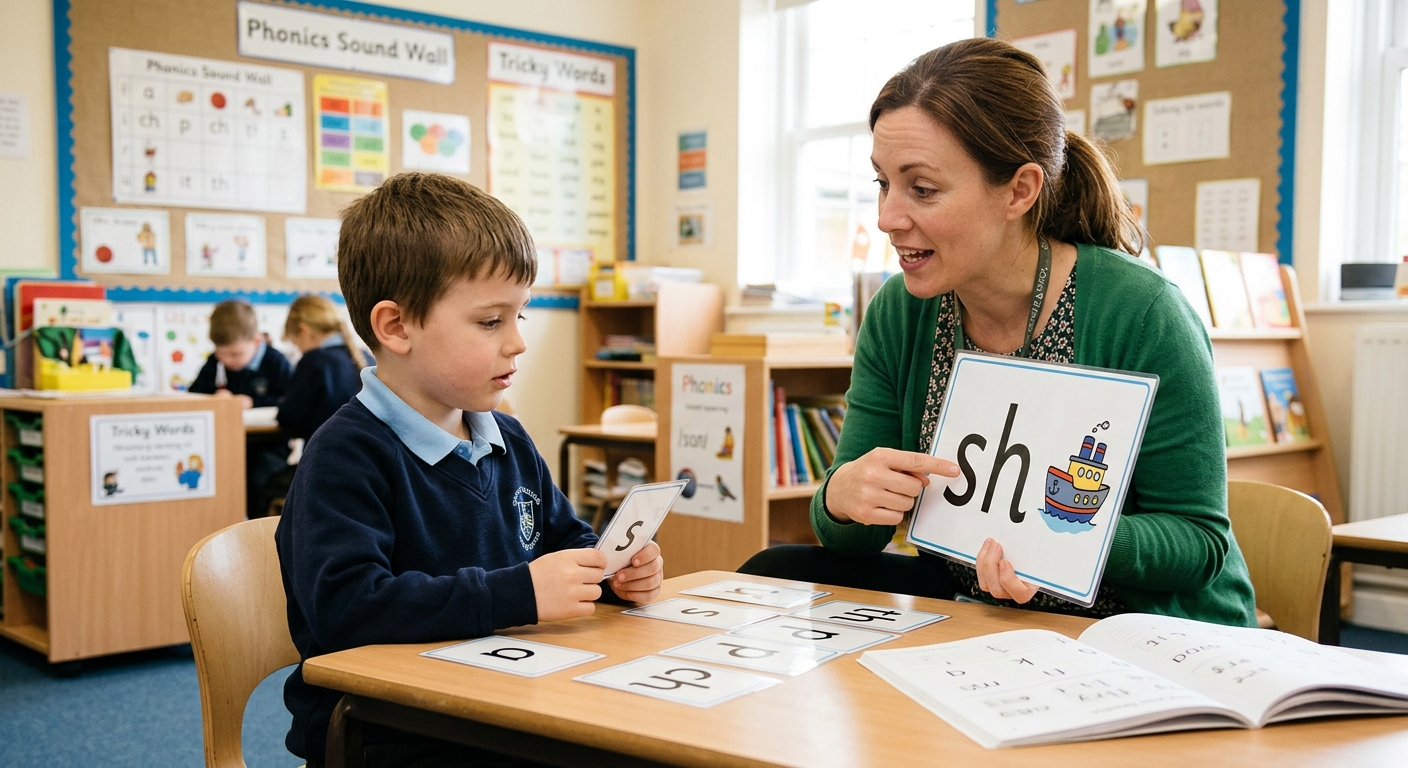
If you have children in primary school today, you have likely noticed a completely different approach. Children as young as four are taught to chant individual speech sounds (“pure sounds”), blend letter groups, and read specially designed decodable books.
This approach is known as Systematic Synthetic Phonics (SSP). But when did phonics become mandatory in UK schools? Why did the government shift toward this specific teaching methodology, and what does it mean if your child is struggling to keep up with their peers?
In this comprehensive article, we will explore what phonics is, the timeline of how it became the required standard in British classrooms, why it is taught, and how difficulty with phonics can serve as an early indicator of dyslexia.
What is Phonics? Understanding the Basics
At its core, phonics is a method of teaching children how to read and write by correlating sounds (phonemes) with the letters or groups of letters (graphemes) that represent them.
Rather than memorising words as whole shapes, phonics equips children with a code-breaking system. When a child encounters a new or unfamiliar word, they don’t have to guess based on context or pictures; instead, they “decode” it.
Key Phonics Terminology Explained:
- Phoneme: The smallest unit of sound in a language. There are roughly 44 distinct phonemes in English speech (e.g., the sound /s/, /t/, /ch/, or /sh/).
- Grapheme: The written representation of a sound. A grapheme can be one letter (like ‘t’), two letters (a digraph, like ‘ch’), three letters (a trigraph, like ‘igh’), or four letters (like ‘eigh’).
- Blending: Combining individual sounds together to form a word. For example, hearing /c/ – /a/ – /t/ and pushing them together to say “cat”. Blending is the essential skill for reading.
- Segmenting: Breaking a spoken word down into its individual sounds to spell it. For example, hearing “ship” and identifying the sounds /sh/ – /i/ – /p/. Segmenting is the essential skill for spelling.
Synthetic Phonics vs. Analytic Phonics
Historically, schools used various forms of phonics instruction. It is important to understand the distinction between the two main types:
- Analytic Phonics: Children analyse whole words to identify sound patterns. For instance, looking at a list of words like ball, boy, and bell, and noticing that they all start with the ‘b’ sound. This was often taught alongside sight-reading and context guessing.
- Synthetic Phonics: Children are systematically taught individual letter-sound correspondences first, before being taught to “synthesise” (blend) those sounds together from left to right to read whole words. Synthetic Phonics is the mandatory approach used in UK schools today.
Why Do We Teach Phonics?
The English language is notoriously complex. Unlike languages like Spanish or Italian, which have highly regular spelling systems (transparent orthography), English is an “opaque” language. It draws roots from Latin, French, Old Norse, German, and Greek, resulting in multiple ways to write the same sound (e.g., rain, day, make) and multiple ways to pronounce the same letter combination (e.g., rough, through, thorough).
Despite this complexity, approximately 85% of English words follow predictable phonic patterns. Teaching phonics systematically provides children with several key educational benefits:
1. Independence and Autonomy in Reading
Without phonics, a child’s reading vocabulary is limited to the exact words they have memorised by sight. Synthetic phonics gives children the tools to decode millions of unfamiliar words independently, building confidence early in their school lives.
2. Equalizing Educational Outcomes
Cognitive research shows that reliance on “whole word” reading or context guessing heavily favours children from print-rich home environments who already possess vast spoken vocabularies. Systematic phonics levels the playing field, providing a structured, explicit tool kit that benefits all children regardless of background.
3. Cognitive Load Efficiency
When word recognition becomes automatic through phonics decoding, it reduces the cognitive burden on a child’s working memory. Once a child no longer has to expend mental energy figuring out what the words on a page say, their brain is free to focus on comprehension understanding the narrative, evaluating meaning, and enjoying the story.
When Did Phonics Become Mandatory in UK Schools?
The transition to making synthetic phonics the compulsory foundation of early reading in England was a gradual policy evolution that spanned over a decade, culminating in key legislative and curriculum changes.
1. The Pre-2006 Landscape: The “Searchlights” Model
In 1998, the UK government introduced the National Literacy Strategy (NLS). At this time, schools were encouraged to use the “Searchlights” model. This approach suggested that reading comprehension was achieved by shining four “searchlights” on text simultaneously:
- Phonics knowledge
- Grammar and syntax
- Context clues (pictures and overall story)
- Word recognition (sight words)
Under this model, if a child stumbled on a word, teachers were encouraged to ask: “What word would make sense here?” or “Look at the picture.” However, educational researchers began to note that weaker readers relied heavily on pictures and context guessing, whereas strong readers were secretly decoding letter-sounds.
2. The Turning Point: The Rose Review (2006)
The definitive shift occurred following a landmark research study in Clackmannanshire, Scotland, which demonstrated extraordinary long-term gains in reading and spelling for children taught using synthetic phonics compared to other methods.
In response, the UK Department for Education commissioned an independent evaluation of early reading led by Sir Jim Rose. Published in March 2006, the Rose Review (Independent review of the teaching of early reading) fundamentally transformed British education.
The report unequivocally recommended that:
Systematic Synthetic Phonics (SSP) should be taught as the primary, high-priority approach for teaching beginner readers, replaced the multi-cueing “Searchlights” model, and be taught as a discrete daily lesson starting by age five.
2006 marks the precise year phonics became the mandatory framework for early reading instruction across state primary schools in England. Following the report, the government published the Letters and Sounds teaching framework in 2007 to help schools implement daily synthetic phonics lessons.
3. Reinforcing Policy: The Phonics Screening Check (2012)
To ensure schools were adhering to the mandate and to catch struggling readers early, the government introduced the compulsory Year 1 Phonics Screening Check in June 2012.
Taken by all 5- and 6-year-olds in England at the end of Year 1, this short assessment requires children to read 40 words aloud to their teacher. The assessment includes 20 real words and 20 pseudo-words (commonly referred to as “alien words” or “nonsense words”, such as vap or strab).
Why use alien words? Nonsense words ensure that a child is truly using their decoding/phonic skills to read the sounds rather than relying on memorised visual memory.
4. The 2014 National Curriculum and Beyond
By the time the revamped National Curriculum was launched in 2014, Systematic Synthetic Phonics was deeply embedded as a legal requirement in Key Stage 1.
In recent years, the Department for Education (DfE) updated its guidance via The Reading Framework, requiring schools to select from a list of officially validated commercial SSP schemes (such as Read Write Inc., Little Wandle, or Sounds-Write) to maintain strict consistency in how phonics is delivered.
Why Some Children Struggle with Phonics
While systematic phonics works remarkably well for the majority of children, a significant percentage continue to struggle despite high-quality classroom teaching. They may consistently score low on the Year 1 Phonics Screening Check or fail to make progress during daily sessions.
When a child exhibits persistent difficulty with phonics, it is rarely due to a lack of effort or intelligence. Instead, it often points to underlying neurodivergent learning differences.
Phonics and Dyslexia: What is the Link?
Dyslexia is a specific learning difficulty that primarily affects the skills involved in accurate and fluent word reading and spelling. It is estimated to affect around 10% of the UK population.
To understand why dyslexic children, struggle with phonics, we must look at how the dyslexic brain processes language:
1. Phonological Processing Deficits
The core cognitive marker of dyslexia is a difficulty with phonological processing the brain’s ability to identify, isolate, and manipulate the individual sounds of spoken language.
Because phonics requires a child to link an abstract visual symbol (a letter) to a distinct sound, a child with poor phonological awareness will find this process extremely confusing. They may struggle to hear the difference between subtle sounds like /b/ and /d/, or /m/ and /n/.
2. Working Memory Limitations
Synthetic phonics places a high demand on short-term working memory. To read a word like blend, a child must:
- See ‘b’ and retrieve the sound /b/.
- Hold /b/ in their mind while looking at ‘l’ and retrieving /l/.
- Hold /b/ and /l/ while looking at ‘e’ and retrieving /e/.
- Do the same for ‘n’ and ‘d’.
- Blend all five sounds together seamlessly.
Children with dyslexia frequently have reduced working memory capacities. By the time they reach the end of a word, they may have forgotten the sounds from the beginning.
3. Rapid Automatized Naming (RAN) Issues
Dyslexic learners often experience delays in retrieval speed the time it takes for the brain to look at a visual letter and recall the auditory sound attached to it. While a neurotypical reader recalls the sound instantly, a dyslexic child’s brain has to work significantly harder and slower to make that connection.
Early Signs of Dyslexia in Primary School Children
If your child is currently learning phonics at school, keep an eye out for these common signs that may suggest a learning difference like dyslexia:
| Age / Stage | Common Phonics & Reading Signs |
| Early Years / Reception (Ages 4–5) | • Difficulty learning nursery rhymes or recognizing rhyming words. • Difficulty learning and remembering the names and sounds of letters. • Struggling to segment spoken words into sounds (e.g., unable to break “dog” into /d/ /o/ /g/). • Confusing similar-sounding words. |
| Year 1 & Year 2 (Ages 5–7) | • Slow progress with blending sounds to read simple words. • Repeatedly guessing words based on the initial letter or picture clues. • High levels of fatigue, distress, or anxiety around daily phonics reading. • Reversing letters or numbers (e.g., mixing up ‘b’ and ‘d’ or ‘p’ and ‘q’) past the expected age. • Difficulty reading nonsense/alien words during practice checks. |
| Key Stage 2 (Ages 7+) | • Inconsistent spelling the same word differently three times on one page. • Reading slowly and haltingly with frequent mispronunciations. • Good comprehension when a story is read to them, but poor comprehension when reading alone. |
What to Do If You Suspect Your Child (or You) May Be Dyslexic
Watching a child struggle with phonics can be frustrating for both parents and young learners. It is important to remember that dyslexia has nothing to do with intelligence. In fact, dyslexic individuals are often exceptionally creative, strategic problem-solvers, and big-picture thinkers.
However, without early identification and tailored support, falling behind in phonics can severely impact a child’s self-esteem and academic confidence.
The First Step: Take a Dyslexia Screening Test
If you notice that your child is consistently falling behind in phonics, or if you are an adult reading this and recognizing your own past struggles with literacy and phonics, the most crucial first step is to seek clarity.
Undertaking a Dyslexia Screening Test is the ideal starting point.
What is a Dyslexia Screening Test?
A screening test is a brief, structured assessment designed to identify indicators and characteristics associated with dyslexia. While a screening is not a formal diagnostic medical assessment, it offers significant benefits:
- Early Identification: It highlights specific areas of weakness such as phonological processing, visual memory, or retrieval speed allowing targeted interventions to begin immediately.
- Informs Educators: The results of a screening test provide valuable evidence to share with your child’s teacher or Special Educational Needs Co-ordinator (SENCO). This enables the school to adjust phonics instruction, provide multi-sensory learning tools, or arrange extra intervention groups.
- Restores Confidence: For both children and adults, discovering that reading difficulties stem from a recognized neurological difference rather than a lack of capability can be tremendously empowering and relieving.
If you suspect that you or your child might be dyslexic, do not wait for difficulties to compound. Taking a dyslexia screening test or requesting an initial screening through your educational provider is a fast, stress-free way to gain clarity and take control of the learning journey.
Supporting a Dyslexic Learner Beyond Phonics
If screening suggests indicators of dyslexia, traditional “more of the same” phonics instruction may not be enough. Dyslexic learners thrive when phonics is taught using Structured Multi-Sensory Methods.
This approach engages multiple senses simultaneously:
- Visual: Seeing the letter pattern.
- Auditory: Hearing and saying the corresponding sound.
- Kinaesthetic/Tactile: Writing the letter in sand, tracing carpet letters, or using physical movement (like hand actions) while saying the sound.
By involving touch and movement alongside sight and sound, multi-sensory phonics builds alternative neural pathways in the brain, making reading connections far easier to retain.
Final Thoughts
Synthetic phonics has been a mandatory mainstay of UK primary education since the Rose Review in 2006, solidified further by the 2012 Phonics Screening Check and current National Curriculum standards. It offers a clear, evidence-based route into reading for millions of children every year.
However, phonics is a heavily phonological process. For children whose brains are wired differently, such as those with dyslexia, mastering phonics can feel like climbing a mountain without a map.
Understanding the history and mechanics of how phonics is taught helps parents and educators recognize when a child’s struggles are a normal part of learning and when they are a sign call for extra support.
If phonics continues to be a hurdle for you or your child, taking a dyslexia screening test today is the first and most vital step toward unlocking effective strategies, building reading confidence, and helping every learner reach their full potential.