

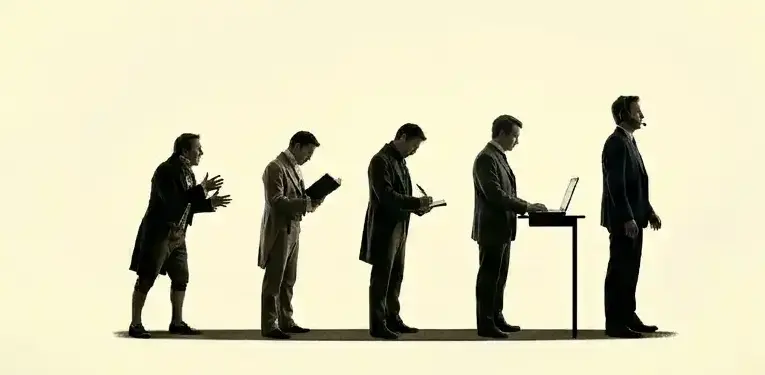
History of Dyslexia
However, humanity did not always understand dyslexia. For centuries, individuals who struggled to decode the written word were tragically misunderstood, often mislabelled as lazy, unintelligent, or defiant. The journey from viewing reading difficulties as a moral or intellectual failing to understanding them as a unique neurological blueprint is one of history’s most fascinating medical and social evolutions.
If you have ever found yourself struggling with reading fluency, spelling, or processing written information despite having a sharp mind and a high intellect, you are walking a path that millions have traversed before you. Understanding the history of dyslexia not only sheds light on how far science has come, but it also empowers us to look toward the future with confidence.
1. The Pre-History of Reading: A Modern World for an Ancient Brain
To truly appreciate the history of dyslexia, we have to look back at the origins of written language itself. Human beings have been speaking for hundreds of thousands of years. Our brains are hardwired for spoken communication; infants pick up speech simply by immersion in a language-rich environment.
Writing, on the other hand, is a relatively recent human invention, emerging roughly 5,000 years ago in ancient Mesopotamia. Reading requires the brain to hijack visual and auditory processing regions and force them to work together. Because reading is not an evolutionary necessity, there is no single “reading centre” in the human brain. Instead, reading requires a complex neural network to convert visual symbols (graphemes) into vocal sounds (phonemes).
Before mass literacy campaigns in the 19th and 20th centuries, formal education was a privilege reserved for the elite. If a person struggled to read in ancient or medieval times, it rarely impacted their daily survival. Most people lived in oral cultures where farming, trade, craftsmanship, and storytelling dictated success. It was only when society shifted toward mandatory schooling and text-based work that the hidden variations in human brain wiring became a visible, widespread challenge.
2. The 19th Century: The Discovery of “Word Blindness”
The formal medical history of dyslexia began in Europe during the late 19th century. Early medical professionals did not initially encounter dyslexia in struggling schoolchildren; instead, they first observed it in adults who had suffered acute neurological trauma.
1872: William Broadbent’s Early Observations
In 1872, a British physician named Sir William Broadbent published observations on stroke patients who had lost the ability to read despite retaining their intelligence and speech. These adults could see the text perfectly fine, and they could speak fluently, but the link between the visual symbol of the word and its mental meaning had been severed by brain damage. This condition became known as acquired dyslexia or alexia.
1877: Adolph Kussmaul Coins “Word Blindness”
Building upon these observations, a German professor of medicine named Adolph Kussmaul made a historic breakthrough in 1877. He encountered an adult patient who was completely unable to learn to read, despite having normal eyesight, intact speech, and an otherwise strong intellect.
Kussmaul realized that this was a highly specific, isolated condition. He coined the term “word blindness” (Wortblindheit) to describe this strange phenomenon where text remained a complete mystery to an otherwise capable mind.
1883: Rudolf Berlin Gives It a Name
The word “dyslexia” itself did not exist until 1883. It was coined by Dr. Rudolf Berlin, a distinguished German ophthalmologist working in Stuttgart.
Dr. Berlin chose this term to classify the specific reading struggles he observed in his adult patients who possessed entirely healthy, functional eyes. By moving the terminology away from “blindness,” Berlin helped shift the scientific focus from the eyes to the brain.
3. The Turn of the Century: Child Development and “Congenital Word Blindness”
By the late 1890s, medical focus shifted from adults with brain injuries to children who were failing to learn to read from an early age, despite showing high capabilities in other areas of life.
1896: W. Pringle Morgan and the Case of Percy
In 1896, a British general practitioner named Dr. W. Pringle Morgan published a brief case study in the British Medical Journal that would change the course of educational history. He wrote about a 14-year-old boy named Percy, who was bright, quick at games, and equal to his peers in intelligence, yet could not read.
Dr. Morgan wrote:
“He has been at school since he was seven years old, and has received long and consistent instruction, yet he can only with difficulty spell out words of one syllable… The schoolmaster who has taught him for years says that he would be the smartest lad in the school if the instruction were entirely oral.”
Morgan labelled Percy’s condition “congenital word blindness,” implying that it was a condition present from birth rather than caused by injury. This was a critical turning point: it proved that reading difficulties were not a sign of low intelligence, poor upbringing, or a lack of effort.
1902: James Hinshelwood Advocates for Early Identification
Shortly after Morgan’s publication, Scottish ophthalmologist Dr. James Hinshelwood dedicated years to studying congenital word blindness. In 1902 and later in his landmark 1917 book, Hinshelwood argued that the condition was localized to specific language-processing regions of the brain. Crucially, he was among the first to advocate for early identification and specialized, one-on-one visual and auditory teaching methods to help these children overcome their struggles.
4. The 20th Century: The Orton Era and Structured Literacy
The mid-20th century witnessed a massive shift from purely identifying dyslexia to developing structural, practical interventions to help individuals read and write successfully.
Dr. Samuel Torrey Orton’s Neurological Breakthroughs
In the 1920s and 1930s, an American neurologist named Dr. Samuel Torrey Orton revolutionized our understanding of dyslexia. Orton worked closely with children who faced reading difficulties and noticed that many of them frequently read or wrote letters backwards (such as confusing ‘b’ and ‘d’, or ‘p’ and ‘q’) or read words from right to left (mirror reading).
Orton rejected the idea that this was an eye defect. Instead, he hypothesized that dyslexia was linked to a concept called cerebral dominance. He suggested that the left and right hemispheres of the brain were not communicating or sharing processing tasks in the typical manner, causing visual reversals. While his exact neurological theories have been updated by modern science, his practical conclusions were visionary.
The Birth of the Orton-Gillingham Approach
Orton teamed up with Anna Gillingham, a gifted psychologist and educator. Together, they developed the Orton-Gillingham approach, a remedial teaching method designed specifically for dyslexic minds. This method relied on a few groundbreaking principles that remain the gold standard of dyslexia teaching to this day:
- Multisensory Learning: Engaging seeing, hearing, touching, and moving simultaneously to anchor letter sounds into memory.
- Explicit Phonics: Teaching the precise rules of how letters map onto sounds systematically, rather than expecting children to guess words from context.
- Structured and Sequential: Moving step-by-step from the simplest sounds to complex linguistic structures.
5. The Civil Rights and Advocacy Movement (1960s–1980s)
For a long time, dyslexia remained a clinical topic hidden away in medical journals. It took determined groups of parents, educators, and visionary advocates to drag the condition into the public consciousness and fight for legal protections.
1963: Dr. Samuel Kirk and “Learning Disabilities”
In 1963, during a historic conference of parents and educators in Chicago, psychologist Dr. Samuel Kirk introduced the umbrella term “learning disabilities.” This unifying concept allowed families to band together, leading to the creation of the Learning Disabilities Association of America.
1968: The First Consensus Medical Definition
In April 1968, the World Federation of Neurology met in Dallas, Texas, to establish the very first international consensus definition of developmental dyslexia:
“A disorder manifested by difficulty in learning to read despite conventional instruction, adequate intelligence, and socio-cultural opportunity. It is dependent upon fundamental cognitive disabilities which are frequently of constitutional origin.”
The Rise of Legal Safeguards
With a formal definition secured, advocacy groups pressed governments for legal recognition. In the United States, the passage of Public Law 94-142 in 1975 (which later evolved into the Individuals with Disabilities Education Act, or IDEA) guaranteed children with learning differences access to free, appropriate public education and specialized accommodations.
Parallel movements unfolded across Europe and the UK, eventually leading to landmark protections like the UK’s Disability Discrimination Act and later the Equality Act, ensuring that dyslexia was recognized as a protected characteristic in both education and the workplace.
6. The Modern Era: Neuroimaging and Neurodiversity
Today, we no longer have to guess what causes dyslexia or wonder how a dyslexic brain handles language. Modern neuroimaging technology has given us a literal window into the living brain.
Mapping the Brain with fMRI
Through functional Magnetic Resonance Imaging (fMRI), neuroscientists can watch the brain’s electrochemical activity in real-time while a person reads.
How Reading Profiles Differ Under Neuroimaging
- Typical Readers: Consistently show high activation in three key areas of the left hemisphere: the frontal region (Broca’s area for articulation), the central parieto-temporal region (for decoding words), and the occipital-temporal region (the “visual word form area” or automatic word recognition centre).
- Dyslexic Readers: Show a distinct under-activation in the central and rear language processing pathways of the left hemisphere. To compensate, the dyslexic brain brilliantly recruits alternative pathways, relying much more heavily on the frontal lobes and the right hemisphere to decode information.
The Neurodiversity Framework
This biological reality has fuelled a major cultural shift away from the “medical deficit” model toward the concept of neurodiversity. Coined in the late 1990s, neurodiversity treats dyslexia not as a broken or damaged brain, but as a natural, alternative form of human variation.
The dyslexic brain is structurally wired differently, resulting in a distinct set of trade-offs. While it faces natural friction with rote phonics and rapid linear word processing, it often possesses incredible, hyper-developed strengths in other vital areas.
| Typical Dyslexic Friction Areas | Celebrated Dyslexic Strengths |
| Rote spelling & decoding mechanics | Big-picture narrative thinking & pattern recognition |
| Rote memorization of facts/dates | Exceptional 3D spatial reasoning & engineering skills |
| Slow reading speed & processing fluency | High creativity, empathy, & out-of-the-box problem solving |
Many of the world’s most innovative minds including Albert Einstein, Leonardo da Vinci, Richard Branson, and Whoopi Goldberg have achieved monumental success precisely because their brains were wired to see the world differently.
Do You Think You Might Be Dyslexic? The Vital First Step
Because dyslexia exists on a broad spectrum, millions of adults and children navigate their lives completely unaware that their quiet daily frustrations with reading, writing, time management, or left-right coordination have a clear biological explanation.
Living with unidentified dyslexia can feel like running a race with invisible weights tied to your ankles. You might know you are deeply capable and creative, yet you find yourself constantly drained by tasks that seem to take others half the time.
If you recognize these patterns in yourself, your child, or a loved one, please know this: the historical stigma is gone, and clarity is entirely within your reach.
Why a Screening Test is Your Gateway to Clarity
The absolute first step to unlocking your potential is undergoing a formal dyslexia screening test. You do not have to struggle in silence or wonder “what if” forever. A screening test is a simple, stress-free, and scientifically validated process that evaluates how your brain processes visual and auditory language information.
A professional assessment provides invaluable benefits:
- Validates Your Experience: It replaces frustrating self-doubt with definitive, objective answers.
- Unlocks Support: It provides the documentation required to access reasonable adjustments, or assistive technology in schools, and workplaces.
- Identifies Your Strengths: It maps out your unique cognitive profile, showing you exactly where your personal strengths lie and how to leverage them.
Let Us Help You Find Answers
At the Indigo Dyslexia Centre, we have spent decades continuing the legacy of empathy, science, and specialized care that began with early pioneers like Dr. James Hinshelwood and Anna Gillingham. Based at our dedicated specialist centre at 2 Duke Street, Norwich, we provide comprehensive, evidence-based dyslexia screening tests tailored for children, students, and adults alike.
Our friendly team of specialists understands that every individual’s story is deeply personal. We offer a calm, welcoming, and entirely accessible testing environment both in-person at our central Norwich office and through convenient online delivery. We take the time to listen to your experiences, look past the labels, and deliver clear, practical recommendations that empower you to move forward in your education or career with unshakeable confidence.
Conclusion: Embodying a Proud History
The history of dyslexia is a testament to the resilience of the human mind and the triumph of scientific understanding over prejudice. We have evolved from a society that viewed reading difficulties as a hidden “blindness” or a mark of low intellect to a world that recognizes and celebrates the incredible cognitive diversity of the dyslexic profile.
If your brain is wired differently, you are not broken. You are simply part of a rich, vibrant history of deep thinkers, innovative creators, and outside-the-box problem solvers.
Take control of your learning narrative today. Contact the Indigo Dyslexia Centre to book your dyslexia screening test, and let us help you transform your invisible daily struggles into your greatest visible strengths.