

How to Get a Copy of Your Old Assessment
If you or your child were assessed for dyslexia or learning differences through the Indigo Dyslexia Centre years ago, you might suddenly find yourself needing that paperwork again. Perhaps a transition to higher education requires formal evidence for support services, or a new employer is asking for proof of reasonable accommodations.
Whatever the reason, you don’t necessarily have to start from scratch. Below is a complete guide on how to request an archived copy of your assessment, how our record correlation process works, what fees are involved, and why you might also want to evaluate whether an older assessment still reflects your current cognitive profile.
Why Assessment Reports Get Misplaced (And Why You’re Not Alone)
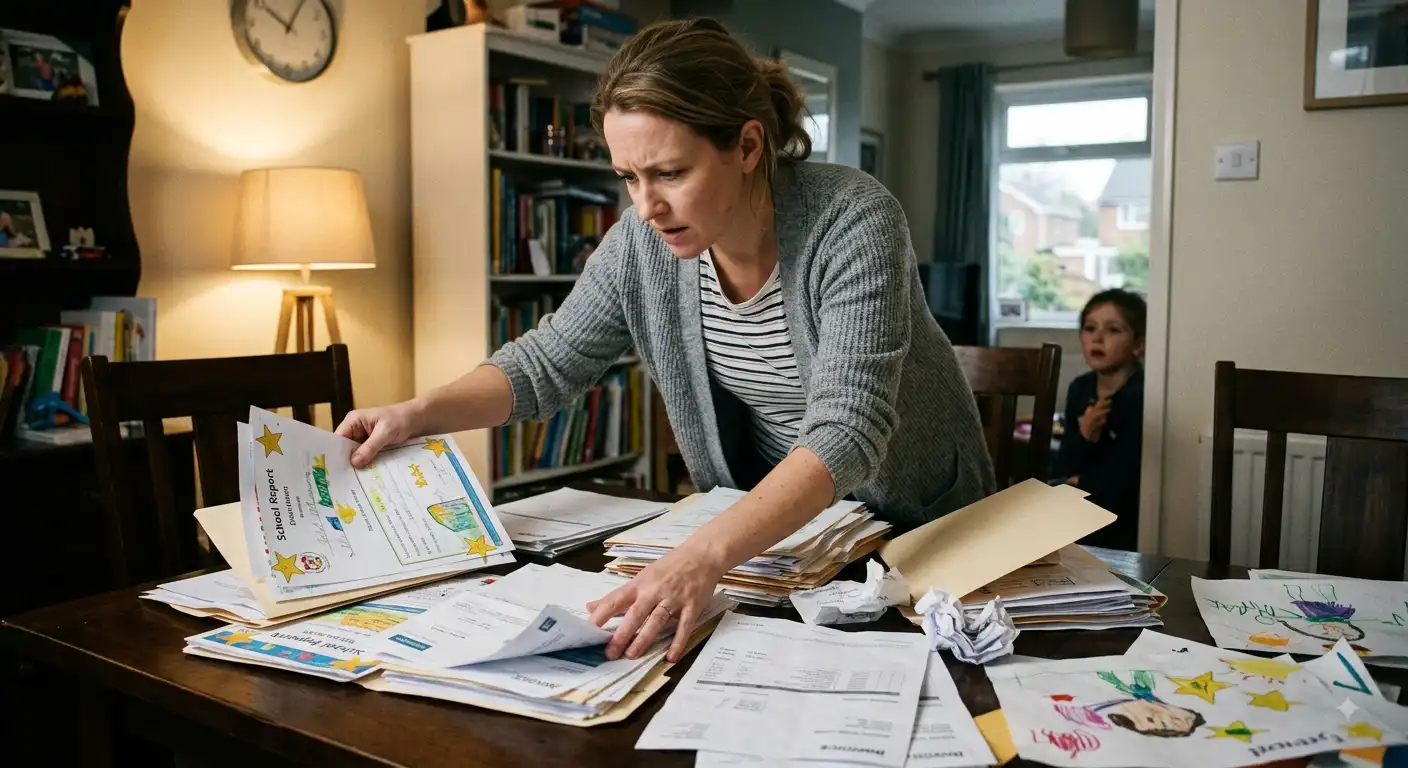
It is surprisingly easy for formal educational and diagnostic paperwork to go missing over time. Diagnostic reports are often issued during a specific window of need such as securing Exam Access Arrangements (EAA) for GCSEs or A-Levels and once those exams are finished, the report gets safely filed away. Fast-forward several years, and that single document suddenly becomes essential again.
Common reasons diagnostic reports end up misplaced include:
- Academic Transitions: A typical student moves schools at least two or three times during their academic journey. Documents sent to a school’s Special Educational Needs Coordinator (SENCo) don’t always automatically follow the student to their next institution.
- Residential Relocations: Moving house involves packing up decades of accumulated paperwork. Physical binders get stored away in loft space, garages, or storage units, making specific documents hard to locate years later.
- Digital Shifts & Old Emails: Reports issued electronically years ago may reside on deactivated school email addresses, outdated hard drives, or forgotten cloud storage accounts.
- Time Elapsing: Often, several years pass between secondary school and entering higher education or the workforce. During those quiet gap years, the necessity of the paperwork fades until a formal application requires it once more.
If you find yourself searching through old drawers with no success, rest assured that this is a routine query for our administration team.
Step-by-Step Guide: Requesting Your Archived Assessment Copy
To maintain strict data protection standards and ensure records are only released to their rightful owners, we follow a secure verification process. Here is how you can initiate a record search with the Indigo Dyslexia Centre.
Step 1: Gather Your Historical Details
Before contacting us, gather as much historical information as possible from the period when the assessment took place. Because our archives span many years, we need specific identifying markers to search our database accurately.
You will need to provide:
- Full Name of the individual assessed (including any former surnames or middle names used at the time).
- Date of Birth.
- Full Postal Address where you were living at the exact time the assessment was conducted.
- Estimated Date/Year when you believe the assessment took place (or approximately how many years ago it occurred).
Step 2: Send Your Request via Email
Once you have these details ready, send an email directly to our team at:
Please use a clear subject line, such as: Archive Copy Request – [Full Name of Assessed Individual]. Including all four pieces of information in your initial email avoids back-and-forth delays and allows us to launch a database search immediately.
Step 3: Database Correlation & Verification
Upon receiving your request, our administrative team will query our archives to find matching data.
Important Privacy & Data Protection Note:
Due to strict privacy regulations and identity verification policies, data will only be released if the information you provide matches our stored records exactly. This safeguards your sensitive personal and diagnostic data against unauthorized disclosures.
If the information provided does not align with the entries in our system, we cannot release any files.
Step 4: Admin Fee Payment (£35)
If our search yields a positive match, we will notify you via email that your record has been located. At this stage, an admin fee of £35 is required to proceed.
This fee covers:
- The administrative overhead of searching, retrieving, and cross-referencing legacy records.
- Assessor time to access archived raw data, verify diagnostic metrics, and format the results into an official format.
- Electronic document generation and secure file delivery.
Payment instructions will be emailed to you directly once a successful correlation is confirmed.
Step 5: Assessor Recreation & PDF Delivery
Once the £35 administration fee is settled, an assessor will retrieve the recorded test data on file and recreate the assessment results. You will then receive an official PDF copy sent directly to your verified email address.
Important Points to Keep in Mind
While we make every reasonable effort to retrieve historical files, there are a few important considerations to be aware of before submitting your request.
1. Digital Archives & Historical Record Availability
The Indigo Dyslexia Centre has supported individuals with dyslexia and specific learning difficulties for many years. However, Indigo has not always kept digital records.
Earlier archives relied on physical paper files, some of which may have exceeded standard retention periods or been subject to historical archival changes. While our team will always do their best to locate your documentation, we cannot guarantee that a copy of every legacy assessment will be recoverable. If no matching data can be located, our team will inform you promptly.
2. Cognitive Profiles Change Over Time
It is a common misconception that a diagnostic assessment for dyslexia represents a permanent, unchanging measurement of cognitive ability. While a diagnosis of dyslexia itself reflects a lifelong neurodivergent profile, individual cognitive profiles are dynamic, not fixed.
This is especially true for children and young adults:
- Neuroplasticity: The human brain particularly during childhood and adolescence is remarkably plastic and adaptable. Intervention strategies, specialized teaching, developmental growth, and environmental factors alter how an individual processes information over time.
- Evolving Strengths & Challenges: A child who struggled significantly with working memory or phonological processing at age eight may have developed robust compensatory strategies or cognitive improvements by age sixteen. Conversely, academic demands increase significantly in higher education, potentially highlighting new areas where support is needed.
3. The “2-Year Rule” & Report Validity
Though a diagnostic assessment or screening report remains valid evidence that dyslexia exists, results that are more than two years old may no longer accurately reflect an individual’s current functional abilities or support requirements.
| Report Age | Validity Status | Practical Usefulness & Considerations |
| Under 2 Years | Current & Fully Valid | Widely accepted for Exam Access Arrangements, school adaptations, and higher education entries without qualification. |
| Over 2 Years | Formally Valid (Diagnostic) | Confirms diagnosis, but cognitive scores may be outdated. May not reflect current working memory, processing speed, or reading age. |
| Over 5+ Years | Historical Evidence | Useful background proof, but funding bodies (like DSA) or employers often request updated screening or an adult profile update. |
If your assessment was conducted several years ago, an educational institution, university disability officer, or employer may ask whether the recommendations still apply to your current day-to-day needs.
Should You Get an Old Copy or Book a New Assessment?
Before paying for an archived copy, consider what you intend to use the report for. Ask yourself the following questions to decide between retrieving an old report or booking a new screening/assessment:
Scenario A: Request an Archived Copy If…
- You need immediate, formal proof that a diagnosis took place in the past.
- You are applying for historical verification or filling out background medical/educational history forms.
- Your assessment was completed relatively recently (within the last 2 to 3 years) and simply needs to be submitted to a new school or college SEN department.
- You wish to keep a copy for your personal family records.
Scenario B: Consider a Rescreening or New Assessment If…
- Your original assessment took place when you were a young child, and you are now preparing for A-Levels, University, or entering the workforce.
- You are applying for Disabled Students’ Allowance (DSA) at university. While post-16 diagnostic reports generally remain valid for DSA, funding bodies frequently require updated testing if the original assessment took place early in primary school or lacks standardized adult-level testing metrics.
- You feel your academic or workplace challenges have shifted, and you require updated, tailored recommendations for modern assistive technology (such as text-to-speech software, mind-mapping tools, or specialized exam accommodations).
- You want an accurate, up-to-date picture of your current cognitive strengths, working memory capacity, and processing speed.
Frequently Asked Questions (FAQ)
How long does the database search process take?
Database searches are typically processed within a few business days of receiving your email request. Once the correlation is confirmed and the £35 fee is paid, recreation usually takes a short additional window depending on assessor availability.
What if I don’t remember my exact address at the time of the assessment?
Try to provide any potential addresses you lived at during that timeframe. Because data privacy regulations require a matching correlation, accurate historical addresses are essential for us to locate and verify your file securely.
Can I request a report copy on behalf of my grown child?
If the individual assessed is now an adult (18 years or older), data protection legislation requires that the request come directly from them, or that explicit written consent is provided authorizing us to release the document to a parent or guardian.
What payment methods are accepted for the £35 fee?
Once we locate a matching record, our administrative team will email you payment instructions.
Summary Checklist for Requesting Your Assessment
Ready to check if your historical assessment is in our archives? Here is your final checklist:
- Gather the full name used at the time of the assessment.
- Confirm the date of birth of the assessed individual.
- Identify the full postal address where you were living when tested.
- Estimate the month/year or approximate number of years ago the test took place.
- Send an email containing all details to indigo@4dyslexics.com.
- Wait for our admin team to run a database correlation check.
- Upon confirmation of a match, pay the £35 admin fee.
- Receive your recreated PDF report via email.
Contact the Indigo Dyslexia Centre
If you have questions about retrieving legacy records, booking a modern re-screening for school, college, or workplace needs, our experienced team is here to help.
- Email: indigo@4dyslexics.com
Whether through retrieving your past records or helping you chart a path forward with an updated assessment, we remain dedicated to supporting your educational and personal journey.