

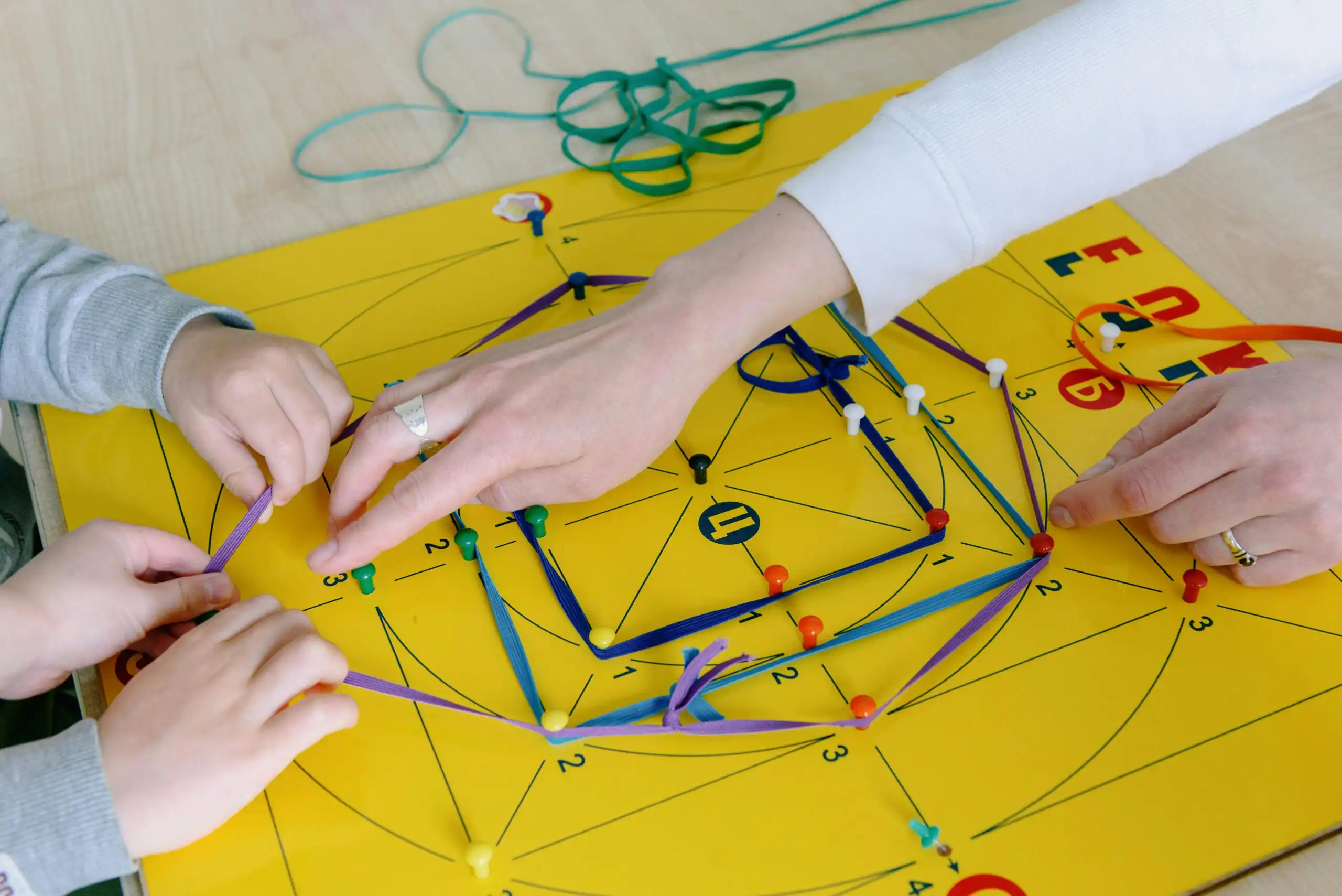
Kinaesthetic learning and Dyslexia
When we look at this physical processing style through the lens of neurodiversity in education, a fascinating pattern emerges: a profound, natural overlap between kinaesthetic learning and dyslexia. For a dyslexic brain, moving, touching, and doing aren’t just preferences they are vital cognitive lifelines.
Understanding the Kinaesthetic Mind
Kinaesthetic learning often referred to as tactile or physical learning is a learning style where tracking, absorbing, and retaining information happens through physical activity, touch, and direct manipulation. While traditional education systems have historically favoured auditory lectures and visual textbooks, modern cognitive science reveals that moving our bodies is one of the most primitive, deeply rooted ways we process reality.
For individuals with dyslexia, traditional visual processing (like reading long blocks of text) and auditory processing (like retaining multi-step spoken instructions) can quickly overload working memory. Kinaesthetic learning bypasses these traffic jams by routing information through entirely different neural pathways.
The Sensory Architecture of Bodily Intelligence
To understand why kinaesthetic learning works so powerfully especially for neurodivergent minds we have to look past the classroom and into our nervous system. This learning style relies heavily on two internal sensory systems that operate beneath our conscious awareness:
- Proprioception: Often called our “sixth sense,” this is the body’s ability to perceive its own position, orientation, and movement in space. It is what allows you to touch your nose with your eyes closed.
- The Vestibular System: Located in the inner ear, this system regulates balance, spatial orientation, and coordination.
When a kinaesthetic learner engages with a concept, they aren’t just looking at symbols on a page; they are mapping those concepts onto their proprioceptive and vestibular frameworks.
Consider the difference between memorizing the concept of centripetal force from a physics textbook versus feeling it pull your arms outward as you spin a heavy bucket of water. For a kinaesthetic learner, the textbook definition is an abstract ghost. The spinning bucket, however, creates an immediate, unforgettable neural anchor. The physical resistance provides tactile data that the brain translates into a permanent conceptual model.
The Science: Embodied Cognition and Dyslexia
For decades, the standard view in cognitive psychology was that the brain acts like a computer: it receives abstract sensory inputs, processes them in a centralized “CPU,” and outputs actions. However, a powerful shift over the last generation of neuroscience has championed the theory of embodied cognition.
Embodied cognition argues that our thoughts, memory, and language are fundamentally shaped by our physical interactions with the world. We don’t just think with our brains; we think with our bodies.
Neuroimaging studies show that when people use their hands to solve a problem or manipulate objects while learning, the motor cortex actively fires alongside the areas of the brain responsible for memory and language (like the hippocampus and Broca’s area).
By involving the motor cortex, a kinaesthetic learner essentially doubles the real estate their brain dedicates to storing that piece of information. They aren’t just building a cognitive memory; they are building a neuromuscular one. For individuals with dyslexia, who may have lower activation in traditional left-hemisphere reading networks, recruiting the motor cortex is a brilliant workaround that unlocks deep comprehension.
Could It Be Dyslexia? The Importance of Screening
Because traditional classrooms and workplaces rely so heavily on reading, writing, and sitting still, bright kinaesthetic learners are frequently mislabelled as lazy, unfocused, or disruptive. In reality, their brains simply process language differently. If you find that you excel with your hands but face a lifelong, exhausting battle with reading speed, spelling, or organizing written thoughts, it is highly possible that your kinaesthetic preference is tied to undiagnosed dyslexia.
If you think you might be dyslexic, you do not have to live with the uncertainty. The vital first step toward unlocking your full potential is to undergo a professional dyslexia screening test.
Screenings provide a clear, stress-free map of how your brain processes information, highlighting both your challenges and your natural cognitive strengths. Specialist providers, such as the Indigo Dyslexia Centre, offer accessible, comprehensive screening and assessment services tailored to help both children and adults understand their unique minds. Discovering that your brain is wired for dyslexia is often an incredibly liberating experience, transforming years of frustration into a clear strategy for success.
Hallmarks of the Kinaesthetic learning and Dyslexia
Kinaesthetic learners are often easy to spot, though in traditional environments, their traits are sometimes mischaracterized as restlessness or a lack of discipline. If you look closer, these behaviours are actually highly efficient data-gathering strategies.
1. High Tactile Sensitivity
They need to touch things to understand them. When shopping, they will automatically reach out to feel the texture of a fabric. When encountering a new object, their first instinct is to pick it up, turn it over, and feel its weight.
2. Conceptualization Through Motion
They use their hands extensively when speaking, often drawing shapes in the air or mimicking physical processes to explain their thoughts. If you ask a kinaesthetic software engineer how data flows through a system, they will likely use expansive hand gestures to represent databases, pipelines, and endpoints.
3. Trial-and-Error Orientation
Where a visual learner might meticulously read an entire instruction manual before assembling a piece of furniture, a kinaesthetic learner will dump the pieces onto the floor and start piecing them together immediately. They learn by running into walls and adjusting their course based on physical feedback.
4. Restlessness Under Passive Conditions
Forcing a deeply kinaesthetic, dyslexic person to sit still in a chair for a three-hour, slide-heavy presentation is the cognitive equivalent of putting them in a sensory deprivation chamber. Their brain begins to shut down. They will fidget, pace, tap their feet, or doodle not because they are checked out, but because their nervous system is desperately trying to generate the physical stimulation it needs to stay awake and process information.
Tactile Learning Strategies Across Different Domains
Kinaesthetic learning is not confined to the gym or the woodworking shop. It can be adapted to master highly abstract, technical, and creative fields, serving as an exceptional tool for managing dyslexia.
| Field | Traditional Method | Kinaesthetic Adaptation |
| Mathematics | Memorizing formulas and equations from a chalkboard. | Using physical manipulatives (like blocks or algebra tiles) to physically build and visualize geometric and algebraic ratios. |
| Language Arts | Reading a play silently or copying vocabulary definitions. | Acting out scenes from literature, using plastic letters to build words, or mapping sentence structures using physical cards that can be rearranged on a table. |
| Software Engineering | Reading documentation or watching video tutorials passively. | “Rubber duck debugging” (speaking out loud while physically pacing) or whiteboarding system designs by hand. |
| History | Memorizing dates and reading historical essays. | Creating physical, wall-sized timelines, visiting historical sites, or participating in role-play simulations of historical debates. |
The Challenge in Modern Classrooms and Workplaces
Despite our growing understanding of embodied cognition, the vast majority of secondary and higher education structures as well as corporate office environments remain optimized for visual and auditory processors. People are expected to listen to lectures, read dense texts, and demonstrate mastery through written, sedentary exams or reports.
When a neurodivergent, kinaesthetic individual struggles in this environment, it is rarely an issue of raw intelligence. It is a translation error. The material is being broadcast in a language their body cannot read.
When forced to remain completely still, a kinaesthetic learner must dedicate a significant portion of their working memory just to suppressing their urge to move. That leaves drastically less cognitive bandwidth available for absorbing the actual lesson or task.
However, when these individuals are allowed to stand, squeeze a stress ball, or use tactile materials, the energy required for physical suppression is released, allowing their full focus to lock onto the subject matter.
How to Optimize Your Life as a Kinaesthetic Adult
If you recognize these traits in yourself, navigating a corporate or academic world built for sitting still can be exhausting. Fortunately, you can redesign your workflow to work with your biology rather than against it.
Step 1: Upgrade Your Workspace
Invest in a standing desk or an under-desk walking pad. The micro-movements required to maintain balance while standing or walking slowly are often exactly what a kinaesthetic brain needs to stay highly engaged during long reading or writing sessions.
Step 2: Translate Abstract Ideas into Physical Objects
If you are managing a complex project, don’t just use a digital spreadsheet. Go to a physical whiteboard. Write tasks on sticky notes. The physical act of gripping a marker, drawing lines, and physically ripping a sticky note from the “In Progress” column and slamming it into the “Done” column provides a massive cognitive and dopamine boost.
Step 3: Embrace the Power of the Walk-and-Talk
When you need to brainstorm, debug a problem, or have a difficult conversation, do it while walking. The rhythmic, bilateral stimulation of walking has been shown to unlock creative blocks and lower stress, making it far easier to process complex, emotionally charged, or highly technical data.
Beyond the “Learning Styles” Myth: Multisensory Integration
It is important to address a common point of scepticism in modern education psychology. Over the last decade, several studies have challenged the rigid idea of isolated “learning styles,” proving that labelling a person as only visual or only kinaesthetic can limit their growth. Critics are right: no one operates in a vacuum.
The goal is not to isolate kinaesthetic learning, but to achieve multisensory integration. The most robust, unbreakable memories are formed when we combine multiple sensory pathways at once. This is the exact foundation of the world’s most successful dyslexia interventions.
Imagine learning anatomy. You read the textbook (visual), you listen to the professor explain the pathway of a nerve (auditory), and then you use clay to physically sculpt that nerve onto a skeleton model (kinaesthetic). You aren’t choosing one style over another; you are building a multi-dimensional, deeply integrated web of knowledge in your brain. For the dyslexic learner, that physical, third step isn’t a bonus exercise it is the structural glue that binds the visual and auditory inputs together.
Conclusion: The Wisdom of the Hands
We live in an increasingly digitized world where our primary interface with reality is a flat glass screen. For the kinaesthetic, neurodivergent mind, this shift can feel like a slow starvation.
Human beings evolved to interact with a three-dimensional world filled with weight, texture, resistance, and space. Movement is not a distraction from deep thought; it is a catalyst for it. By honouring the need for physical engagement, touch, and trial-and-error experimentation, we can unlock a profound reservoir of practical intelligence. Whether you are an educator, a professional, or someone discovering their own neurodiversity, remember: sometimes, to truly understand something, you have to take it in your hands.