

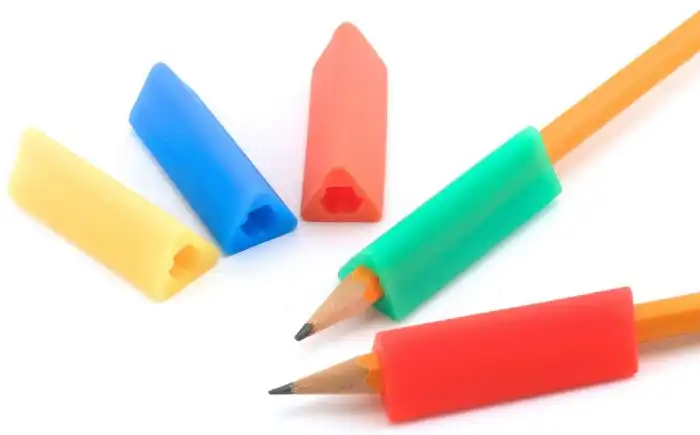
How Pencil Grips Support Individuals with Dyslexia
While dyslexia is fundamentally a learning difference that impacts phonological processing, British educational research and occupational therapy guidelines frequently highlight its co-occurrence with subtle motor-planning and fine-motor control vulnerabilities. This is where an often-overlooked tool steps in: the humble pencil grip.
Far from being a simple primary school accessory, an ergonomic pencil grip serves as a vital physical scaffold. By reducing the cognitive load required to hold a writing utensil, pencil grips remove physical barriers to handwriting. This allows individuals with dyslexia to channel their mental energy into what truly matters: spelling, structure, and self-expression.
The Hidden Connection Between Dyslexia and Handwriting Fatigue
To understand why a plastic, foam, or silicone sleeve on a pencil can make a profound difference for someone with dyslexia, it helps to examine how the human brain manages complex multi-layered tasks.
Writing is not a single, isolated action; it is a stack of simultaneous cognitive, linguistic, and physical demands. For a neurotypical individual, the mechanical aspect of writing holding the pencil, exerting the correct pressure, and moving the fingers fluidly becomes an automated background process at an early stage of development.
For individuals with dyslexia, however, this automation often fails to stabilize easily. The underlying neurological profile can significantly impact executive functioning, motor planning, and working memory. They must actively think about how to hold the pen, how hard to press, and how to guide their hand across the page, all while simultaneously working through the challenging cognitive mechanics of spelling and sentence formulation.
1. Motor Planning and Fine-Motor Control
Individuals with dyslexia frequently exhibit co-occurring challenges with motor planning (dyspraxia or developmental coordination disorder often overlap with dyslexia). Motor planning is the ability to conceive, plan, and carry out a sequence of unfamiliar or precise actions. When holding a standard, narrow wooden pencil, a dyslexic writer may struggle to intuitively find a functional grasp. Instead, they often adopt highly inefficient, compensatory grips, such as a tight, white-knuckled “fist” grasp or an aggressive “thumb wrap” where the thumb locks tightly over the pointer finger.
2. The Cycle of Muscle Strain and Proprioception Deficits
These inefficient grasps collapse the open “web space” the circular skin bridge between the thumb and index finger that is structurally necessary for fluid, dynamic writing. Without this open space, the small muscles in the fingers cannot move freely. The writer is forced to steer the pencil using the larger joints of the wrist, elbow, or even the shoulder.
This mechanical workaround causes rapid muscle fatigue, hand cramping, and joint strain. Furthermore, many individuals with learning differences experience minor difficulties with proprioception the body’s internal sense of its own position, movement, and force. Consequently, they often press down on the paper with excessive, crushing force. Within minutes, their hands hurt, their forearms tire, and writing becomes a deeply frustrating, painful experience.
3. Cognitive Load Theory in Action
According to Cognitive Load Theory, the human brain has a finite, limited amount of working memory available at any given moment.
- Without a Grip: A student with dyslexia spends up to 40% of their mental energy managing physical pain and correcting an unstable hand posture, and another 50% trying to decode or encode phonetic sounds. That leaves a meagre 10% for creative expression, reading comprehension, or vocabulary choice.
- With a Grip: The physical task of finger placement and stabilizing the utensil is mechanically outsourced to the ergonomic sleeve. The cognitive load drops, instantly freeing up mental bandwidth for spelling, organizing thoughts, and processing written language.
Do You Suspect You or Your Child Might Have Dyslexia? The Importance of Professional Screening
Because dyslexia impacts more than just reading speed, recognizing the signs early can completely transform a person’s educational or professional journey. Persistent handwriting fatigue, difficulty keeping up with written notes, spelling inconsistencies, and spatial disorganization on the page are all common secondary indicators of dyslexia.
If you think you or your child might be dyslexic, the crucial first step is to seek a comprehensive dyslexia screening test. A screening test evaluates phonological awareness, working memory, processing speed, and cognitive patterns to determine if dyslexia is present and to provide an official roadmap for support.
In the UK, excellent specialist support is available through recognized providers such as The Indigo Dyslexia Centre. Organizations like Indigo offer professional, accessible screening options for both children and adults. Getting tested not only unlocks access to vital school-based accommodations but it also empowers individuals with a profound understanding of how their brain works, pairing them with the exact assistive tools, like specialized pencil grips, that they need to thrive.
Top 6 Types of Pencil Grips Available in the UK
Pencil grips are carefully designed therapeutic tools, engineered to encourage specific anatomical positioning. Below are the six most common types of pencil grips used by British educators, Special Educational Needs Coordinators (SENCOs), and occupational therapists to correct inefficient grasps and alleviate writing pain.
1. The Classic Triangular Grip
- Design & Mechanics: This is the most straightforward, universally recognizable grip style. It features a simple, three-sided, semi-moulded design that slides easily onto any standard pencil or biro.
- How It Helps: The flat planes naturally guide the writer’s fingers into a basic tripod setup (thumb, index, and middle finger each claim one side). It is highly unobtrusive and excellent for general UK classroom settings because it does not draw undue attention or make a student feel self-conscious about using a writing aid.
2. The Ergonomic Molding (e.g., “The Ultra Pencil Grip”)
- Design & Mechanics: Often referred to as the gold standard of writing aids, this grip is a bulbous, heavily contoured sleeve made of smooth, pliable silicone or rubber. It features explicitly carved, asymmetrical indentations tailored for the thumb and index finger.
- How It Helps: It provides a significantly wider surface area to hold, which instantly relaxes the hand muscles and prevents the fingers from locking up. By gently guiding the fingers into the precise indentations, it opens up the web space and maximizes dynamic control while providing comfortable cushioning for those who tend to press down with excessive force. Most reputable versions sold in the UK are fully ambidextrous, clearly marked with “L” and “R” to guide correct placement for both left- and right-handed writers.
3. The Crossover Grip / Cross-Guard
- Design & Mechanics: Building upon the ergonomic mold, the Crossover Grip features a distinct physical barrier a set of flexible silicone “wings” or “cross-guards” that sit over the top of the finger rests.
- How It Helps: This style is explicitly engineered for individuals who suffer from a severe “thumb overwrap” habit. The physical wings prevent the thumb from crossing over the index finger or climbing up the barrel of the pencil, keeping the fingers perfectly isolated in their functional zones without requiring constant conscious correction from the writer.
4. The Grotto Grip
- Design & Mechanics: The Grotto Grip is a highly structured, firmer therapeutic tool widely recommended by NHS Occupational Therapy teams. It features very deep, asymmetrical finger cups and a prominent centre partition that completely blocks improper finger placement.
- How It Helps: It leaves virtually zero room for error. It is designed to train and re-educate the hand into a mature, dynamic tripod grasp. Because of its firm, rigid feedback, it is ideal for individuals who require intense physical prompts to maintain proper hand mechanics and cannot yet maintain a grip on softer, more flexible options.
5. The Claw Grip (Writing CLAW)
- Design & Mechanics: This highly distinctive grip consists of a central hub that slides onto the pencil, out of which branch three flexible, cup-shaped pockets. The user places their thumb, index finger, and middle finger directly inside these individual cups.
- How It Helps: The Claw Grip provides total physical enforcement. It eliminates the need for the writer to constantly remember where their fingers belong, making it an absolute favourite in UK primary schools for early-stage intervention or for individuals with more pronounced fine-motor delays and spatial awareness challenges.
6. Foam or Gel Comfort Sleeves (Cylindrical)
- Design & Mechanics: These are simple, uniform, cushioned tubes made of soft foam or squishy gel (such as the classic Ridged Comfort Grip). Unlike the others, they do not have built-in ridges, wings, or specific finger cups.
- How It Helps: While they do not actively correct an improper finger position, they increase the overall diameter of the pencil barrel and provide massive shock absorption. They are incredibly beneficial for older secondary students, university students, or adults who already have an established, unchangeable grasp but suffer from severe hand fatigue, blisters, and joint pain due to high writing pressure.
Where to Buy and Cost Breakdown
Pencil grips are incredibly cost-effective interventions. They are affordable, durable, and highly accessible across the United Kingdom for parents, schools, and adult professionals alike.
Where They Can Be Obtained in the UK
- Specialist UK Dyslexia & SEND Vendors: Outlets specializing in Special Educational Needs and Disabilities (SEND) such as The Dyslexia Shop, Sensory Education, and Crossbow Education offer highly curated, SENCO-tested varieties. Purchasing from dedicated charities like the Helen Arkell Dyslexia Charity shop also ensures you are getting genuine, therapeutically sound designs while supporting a vital cause.
- High Street & Online Office Suppliers: Major high street stationery chains like TGjones, alongside large office supply warehouses like Staples or Viking, frequently stock basic triangular and foam comfort grips in their school readiness or ergonomic office supply aisles.
- General Online Marketplaces: Platforms like Amazon UK provide massive variety, allowing you to buy multi-packs, assorted kits, or specific trusted brands (like Firesara or The Pencil Grip, Inc.) with rapid next-day delivery.
UK Cost Structure
Because grips are typically sold in multi-packs, the cost per unit remains exceptionally low. Below is a breakdown of estimated prices including VAT:
- Triangular Grips (Basic): Typical pack size of 10–20. Estimated UK price range is £4.00 – £8.00, averaging roughly £0.40 per grip.
- Ergonomic Molds (e.g., Ultra Pencil Grip): Typical pack size of 5. Estimated UK price range is £8.00 – £10.00, averaging roughly £1.80 per grip.
- Crossover / Cross-Guard Grips: Typical pack size of 5. Estimated UK price range is £7.00 – £11.00, averaging roughly £1.80 per grip.
- Grotto Grips: Typical pack size of 5. Estimated UK price range is £8.00 – £10.00, averaging roughly £1.80 per grip.
- The Writing CLAW: Typical pack size of 5–6. Estimated UK price range is £9.00 – £13.00, averaging roughly £2.00 per grip.
- Foam / Gel Comfort Sleeves: Typical pack size of 5–10. Estimated UK price range is £3.00 – £6.00, averaging roughly £0.60 per grip.
Choosing the Right Grip: A Practical Framework
Not every hand requires the same level of support. Introducing a grip that is too restrictive can cause immense frustration, while a grip that is too simple might fail to prevent muscle strain. When selecting an assistive writing tool for an individual with dyslexia, consider this practical three-step approach:
Step 1: Identify the Primary Issue
- Is the writer crossing their thumb aggressively over their fingers? Choose a Crossover or Grotto grip to build a physical barrier.
- Is their hand simply cramping or locking up from squeezing a tiny, narrow pencil barrel? Choose a plush Ergonomic Mold or a thick Foam Sleeve to widen the surface area.
- Are they a younger student struggling to remember where their fingers go altogether? Opt for the total physical enforcement of the Claw Grip.
Step 2: Start with Flexibility, Then Scale Up
It is often wise to buy an assorted therapy pack (frequently sold as “Selection Packs” or “Combi Packs” by UK sensory suppliers) containing several different styles. Allow the writer to test various textures (gel vs. foam vs. smooth silicone) and shapes in a low-pressure environment. Finding what feels most natural to their unique hand biomechanics is key to long-term adoption.
Step 3: Pair with Additional Writing Accommodations
A pencil grip works best when integrated into a holistic, supportive environment. For a British student working within the framework of an Education, Health and Care (EHC) plan or receiving school-based SEN support, a pencil grip should be paired with other low-tech accommodations.
Combining a pencil grip with an angled writing slope (or slant board) helps align the wrist, while smooth-flowing gel ink or rollerball pens reduce the friction required to mark the page. Together, these simple interventions drastically reduce physical fatigue, allowing a dyslexic individual’s written creativity, intellect, and original thoughts to flourish completely unhindered.