
This leads to the central question: How much does dyslexia testing cost?
The short answer is that there is no single fixed price for dyslexia testing. This is because dyslexia testing exists across three distinct levels, each designed for different purposes, age groups, and financial investments. Understanding which level of testing you actually need is the single best way to avoid overpaying or jumping into an unnecessarily complex diagnostic process too early.
Whether you are a parent seeking help for a child in school or an adult exploring answers for your career, this step-by-step breakdown explains the three main levels of dyslexia testing, what each costs, and how to navigate the road to assessment efficiently.
Understanding the 3 Levels of Dyslexia Testing
Before scheduling an appointment, it is crucial to understand that dyslexia testing is not a “one-size-fits-all” product. Testing ranges from quick computerized screeners used to flag potential indicators, all the way to legal-grade, multi-hour evaluations conducted by educational psychologists.
Here is how the three distinct levels break down by purpose, delivery, and cost.
Level 1: Basic Computerized Screening Tests
Cost: Free to £30
Basic screening tests are the entry point of dyslexia identification. These tests are predominantly software-based, short (taking anywhere from 15 to 45 minutes), and designed to highlight whether an individual demonstrates indicators commonly associated with dyslexia.
How It Works
A basic screening test typically evaluates key cognitive markers, including:
- Phonological processing and phonemic awareness
- Visual and auditory memory speed
- Rapid naming skills
- Basic reading speed and tracking
Because these tests are driven by software algorithms rather than a live specialist, they can quickly indicate whether an individual has a “high risk” or “low risk” profile for dyslexia.
Who Is It Best For?
Level 1 screening is designed for anyone who suspects they might have dyslexia but needs a low-pressure, fast initial check. It acts as a primary filter to tell you whether further investigation is warranted.
Where to Get It & What It Costs
- Through Schools & Colleges: Some primary schools, secondary schools, universities, and FE colleges have licenses for digital screening tools. If you speak to your school’s SENCO (Special Educational Needs Coordinator) or student support team, these screenings are usually provided free of charge.
- Privately Online: If your educational institution does not provide access, basic self-administered online screeners can be purchased individually for around £10 to £30.
Key Takeaway: Level 1 screeners do not provide a formal diagnosis. However, they are an excellent, zero-risk starting point if you want to test the waters.
Level 2: Advanced Face-to-Face Dyslexia Screenings
Cost: £100
If a basic screening test shows indicators of dyslexia or if your school does not offer free digital screeners the logical second step is an Advanced Dyslexia Screening Test.
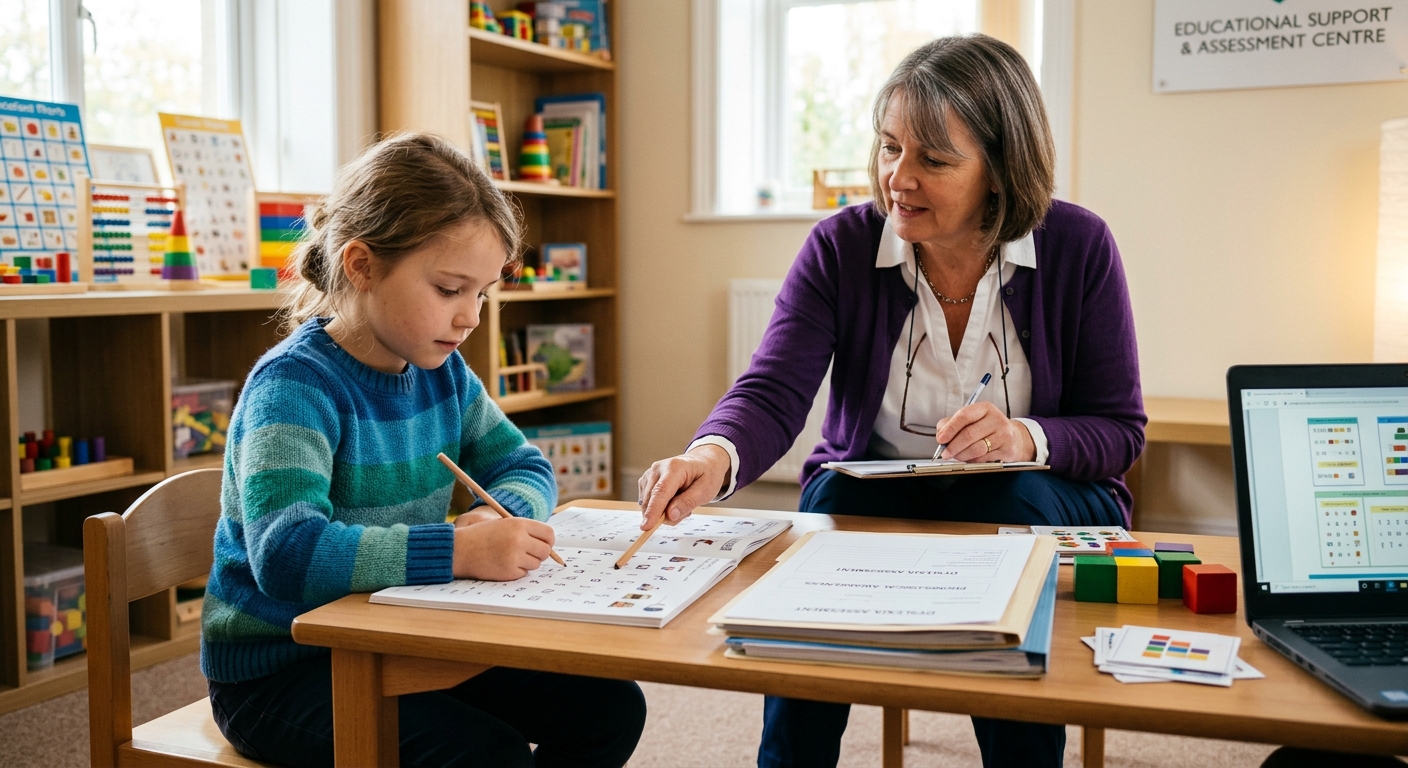
Unlike software-only tests, an advanced screening is conducted face-to-face by a trained, experienced dyslexia assessor or specialist teacher.
How It Works
An advanced screening usually lasts between 60 to 90 minutes. It takes a holistic look at the individual’s learning profile through standard cognitive activities, reading exercises, and structured conversation.
Because a human specialist is administering the assessment, Level 2 testing offers massive advantages over a computer test:
- Nuanced Observation: The assessor can observe frustration, hesitation, working memory fatigue, and problem-solving behaviours in real-time.
- Parent & Individual Discussion: There is dedicated time to talk through personal history, family background, academic struggles, and workplace challenges.
- Detailed Feedback: You receive a clear summary of strengths, weaknesses, and actionable strategies for home or school.
- Expert Next-Step Advice: The assessor will give you an honest recommendation on whether you should invest in a full Level 3 diagnostic assessment or if classroom/workplace accommodations are sufficient on their own.
Who Is It Best For?
Advanced screening is ideal for parents who want clear, expert insights into their child’s learning profile without immediately committing to a multi-hundred-pound diagnostic bill. It is also perfect for adults wanting structured feedback on their cognitive strengths and reading challenges.
Where to Get It & What It Costs
Advanced face-to-face screenings typically cost around £100. Specialist organizations such as the Indigo Dyslexia Centre offer these comprehensive screenings administered by qualified practitioners. This provides a balance of expert human interaction, affordability, and practical advice.
Level 3: Full Diagnostic Assessments
Cost: £700 to £900+
A Full Diagnostic Assessment is the highest, most comprehensive level of dyslexia testing available. It is the only evaluation that results in a formal, legal diagnosis of dyslexia.
How It Works
Conducted exclusively by a registered Educational Psychologist or a certified Specialist Dyslexia Teacher Assessor (holding a current Assessment Practising Certificate), this assessment is an exhaustive, deep dive into cognitive processing.
Taking anywhere from 3 to 5 hours to complete, the test covers:
- Underlying general cognitive ability (verbal and non-verbal reasoning)
- Phonological processing, memory span, and processing speed
- Attainment levels in reading comprehension, single-word reading, writing speed, and spelling
- Exclusion of other contributing factors (visual/hearing impairments, language barriers)
Following the session, the clinician produces an extensive, highly detailed psychometric report (often 20 to 30 pages long) detailing exact percentile scores, legal conclusions, and tailored adjustments.
Who Is It Best For?
Because of the significant price tag and depth, diagnostic assessments are generally reserved for situations where a definitive legal diagnosis is mandatory. Common triggers include:
- Accessing Formal Funding: Applying for the Disabled Students’ Allowance (DSA) at university or securing specific local authority EHCP (Education, Health and Care Plan) funding.
- Legal & Workplace Benchmarks: Securing formal workplace adjustments under disability equity laws, or for legal proceedings where official proof of a Specific Learning Difficulty (SpLD) is required.
What Does It Cost?
Due to the specialist qualifications required and the multi-hour scoring and report writing involved, a full diagnostic assessment usually costs between £700 and £900, though fees can reach £1,000+ depending on location and practitioner credentials.
Dyslexia Testing Cost & Feature Comparison
| Feature / Level | Level 1: Basic Screener | Level 2: Advanced Screener | Level 3: Diagnostic Assessment |
| Typical Cost | Free – £30 | ~£100 | £700 – £900+ |
| Format | Computerized / Online | In-Person (Face-to-Face) | In-Person / Clinical Evaluation |
| Administered By | Software | Trained Assessor / Specialist | Educational Psychologist / Certified Specialist Assessor |
| Duration | 15–45 Minutes | 60–90 Minutes | 3–5 Hours |
| Provides Formal Diagnosis? | No | No | Yes (Legal Standard) |
| Primary Purpose | Initial risk check | In-depth advice & strategy | DSA funding, legal proof |
Which Dyslexia Test Should You Choose? The Recommended Step-by-Step Path
If you are a parent or individual considering dyslexia testing, the sheer cost of top-tier assessments can be intimidating. However, you rarely need to jump straight to a £700+ diagnostic assessment.
To protect your finances and ensure you get the right support at the right time, follow this standard step-by-step roadmap:
Step 1: Start with your Educational Institution
Your first step should always be to speak with your child’s school SENCO, or your college/university disability advisor. Ask if they offer free internal screening tests. Many schools can run a Level 1 screener and put immediate classroom support strategies in place without requiring a private diagnosis.
Step 2: Book an Advanced Screening Test (£100)
If your school or workplace does not provide free screening or if their initial check leaves you with unanswered questions book a face-to-face Level 2 screening test. Turning to independent, specialized providers such as the Indigo Dyslexia Centre gives you access to experienced assessors for around £100.
This step provides vital clarity, clear guidance on helpful coping strategies, and invaluable feedback on whether your child actually needs to progress to a full diagnosis.
Step 3: Step Up to a Diagnostic Assessment (Only If Advised)
You should generally only book a Level 3 Diagnostic Assessment if:
- Your Level 2 assessor or educational institution explicitly advises that a full assessment is necessary.
- You require formal proof for legal purposes, university DSA funding.
By following this progressive pathway, you avoid spending money on high-level testing before establishing whether it is truly necessary.
Frequently Asked Questions About Dyslexia Testing Costs
Does the NHS cover dyslexia testing costs?
No. In the UK, the NHS does not view dyslexia as a medical condition or illness, meaning NHS funding is not available for dyslexia assessments. Testing is handled entirely through educational institutions or private providers.
Can a school refuse to accept a private dyslexia screening?
A school is not legally required to alter conditions based solely on a screening test. However, most schools welcome Level 2 screening reports from recognized centres (like the Indigo Dyslexia Centre) as valuable guidance for adjusting day-to-day teaching strategies.
What if I can’t afford a full diagnostic assessment?
If a Level 3 assessment is deemed necessary for university or college, many higher education institutions offer student hardship funds or bursaries that cover part or all of the diagnostic assessment cost. Always ask your institution’s student support service before paying out of pocket.
Final Thoughts: Take It One Step at a Time
Knowing how much dyslexia testing costs allows you to make an informed, stress-free decision. Remember: you do not need to figure everything out on day one.
Start at the beginning. Speak to your educational institution to see what free screeners are available. If that isn’t an option, arrange an advanced face-to-face screening through a trusted provider like the Indigo Dyslexia Centre. Let an experienced assessor guide your journey ensuring that if you eventually spend money on a full diagnostic assessment, you do so with complete confidence that it is the right move for your future.