

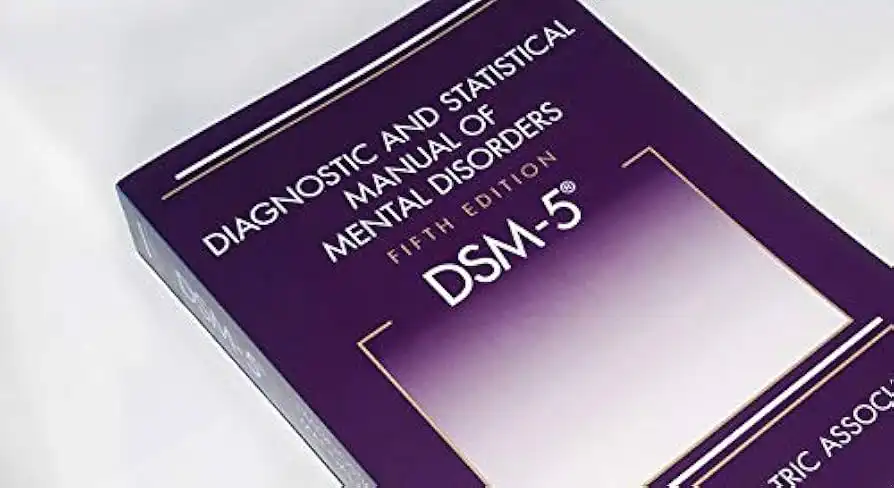
DSM-5 and Dyslexia
The way the DSM-5 approaches dyslexia often surprises people. It doesn’t actually use “dyslexia” as a standalone, primary diagnostic category. Instead, it reclassified the condition under a broader umbrella. This shift has left many wondering: Is dyslexia still an official diagnosis? How do clinicians test for it? And what do these updates mean for getting support?
This comprehensive guide breaks down the DSM-5 dyslexia criteria, explores the evolutionary shift in how learning differences are recognized, and provides actionable steps on how to get the clarity you deserve.
What is the DSM-5?
Before looking at literacy explicitly, it helps to understand what the DSM-5 actually is. Published by the American Psychiatric Association (APA), the DSM-5 is often called the “bible” of clinical psychology and psychiatry. It sets the official, standardized criteria that healthcare providers, clinical psychologists, and educational specialists use to diagnose neurodevelopmental, mental health, and learning conditions.
Standardized manuals ensure that an individual presenting with reading difficulties in Manchester will be assessed using the exact same clinical benchmarks as someone in New York or Sydney. It maps out systemic symptoms, timelines, and severity ratings to help professionals move away from guesswork and toward evidence-based strategies.
The DSM-5 Shift: From “Dyslexia” to Specific Learning Disorder
When the fifth edition of the DSM was released, it brought massive structural changes to how we view learning differences. In previous editions (like the DSM-IV), conditions like reading disorders, mathematics disorders, and disorders of written expression were diagnosed completely separately.
The DSM-5 replaced those distinct diagnoses with one single overarching category: Specific Learning Disorder (SLD).
Understanding the Subtypes (Specifiers)
Under this overarching framework, a clinician cannot simply diagnose “SLD.” They must add specific subcategories or “specifiers” to pinpoint exactly where an individual’s academic challenges lie. The manual outlines three primary areas of impairment:
- Specific Learning Disorder with impairment in reading (This is the clinical equivalent to dyslexia).
- Specific Learning Disorder with impairment in written expression (Historically referred to as dysgraphia).
- Specific Learning Disorder with impairment in mathematics (Historically referred to as dyscalculia).
Did the DSM-5 ban the word dyslexia?
No. The text explicitly states that “dyslexia” remains an acceptable alternative term for referring to persistent patterns of learning difficulties characterized by problems with accurate or fluent word recognition, poor decoding, and poor spelling capabilities.
Essentially, while your formal diagnostic paperwork or psychological report might read Specific Learning Disorder with impairment in reading, it is fundamentally describing dyslexia.
The Diagnostic Criteria: How the DSM-5 Identifies Dyslexia
To receive a clinical diagnosis under the DSM-5 guidelines, an individual must meet strict criteria. The diagnostic process does not rely solely on a single low score on a reading test; it looks closely at history, environment, and how long the struggles have persisted.
The manual outlines four core criteria (labelled Criteria A through D) that must be satisfied:
Criterion A: Persistent Academic Difficulties
The individual must display at least one of the following symptoms that have persisted for at least 6 months, despite targeted interventions (like extra tutoring or school support):
- Inaccurate or slow, effortful word reading (e.g., reading aloud hesitantly, guessing words, struggling to sound out words).
- Difficulty understanding the meaning of what is read (e.g., reading a text fluently but failing to recall the sequence, connections, or deeper meaning).
- Difficulties with spelling (e.g., omitting, substituting, or adding vowels or consonants).
- Difficulties with written expression (e.g., multiple grammatical or punctuation errors within sentences, or poor paragraph organization).
Criterion B: Quantifiably Low Academic Skills
The affected academic skills must be substantially and quantifiably below those expected for the individual’s chronological age. This is verified using standardized, individually administered achievement tests. For older teens and adults, a documented history of severe learning difficulties can satisfy this requirement if formal testing isn’t fully reflective of their childhood struggles.
Criterion C: Early Onset (With a Caveat)
The learning difficulties must begin during school-age years. However, the manual notes a critical nuance: these difficulties may not fully manifest until academic demands exceed the individual’s limited capacities. This explains why many bright children manage to “mask” or compensate for their dyslexia early on, only to hit a wall in secondary school, university, or a fast-paced professional environment.
Criterion D: Ruling Out Other Causes
The learning difficulties cannot be better explained by other factors. A clinician must rule out:
- Intellectual disabilities.
- Uncorrected visual or auditory problems.
- Other mental or neurological disorders.
- Lack of proficiency in the language of academic instruction.
- Inadequate educational instruction.
Categorizing the Severity Matrix
Unlike older versions of the manual that treated learning difficulties as a binary “yes/no” condition, the current DSM-5 framework requires clinicians to grade the condition based on a severity matrix. This helps educators and workplace managers understand exactly what kind of accommodations are required.
| Severity Level | Clinical Presentation Under DSM-5 | Required Accommodations |
| Mild | Difficulties learning skills in one or two academic domains. The individual may be able to compensate or function well if provided with appropriate accommodations. | Minimal or specialized accommodations (e.g., extra time on exams, text-to-speech software). |
| Moderate | Marked difficulties learning skills, meaning the individual is unlikely to become proficient without intensive, specialized intervals during the school years. | Ongoing, specialized instruction and intensive accommodations at school or in the workplace to complete tasks accurately. |
| Severe | Severe difficulties affecting multiple academic domains, making it highly unlikely the individual will learn those skills without ongoing, highly individualized, and specialized top-tier support. | Extensive, individualized support for most of their academic or professional life, even with maximum accommodations in place. |
Why the DSM-5 Definition Matters for Real-World Support
The evolution of the DSM-5 learning disabilities framework was designed to improve clinical accuracy, but it has had a massive ripple effect on real-world support systems, schools, and adult employment.
1. Moving Away from the “IQ Discrepancy” Model
Historically, to get a dyslexia diagnosis, an individual had to show a massive gap between their high IQ score and their low reading scores. If a child had average reading skills but a lower IQ score, they were often denied support.
The DSM-5 successfully eliminated this mandatory discrepancy model. Now, the focus is entirely on whether the individual’s reading skills are substantially below their age group and whether it is actively holding them back. This has opened the door for thousands of people who were previously denied accommodations.
2. Highlighting “Comorbidity”
It is incredibly rare for neurodiversity to exist in a vacuum. The DSM-5 explicitly highlights that Specific Learning Disorder often co-occurs with other neurodevelopmental conditions, such as:
- ADHD (Attention-Deficit/Hyperactivity Disorder)
- Developmental Language Disorder (DLD)
- Anxiety disorders
By grouping these under an overarching neurodevelopmental umbrella, the manual encourages evaluators to look at the whole person rather than just evaluating reading in isolation.
The Trajectory: Signs of Dyslexia Across the Lifespan
Because the DSM-5 looks at how learning impairments evolve over time, it’s vital to recognize that dyslexia doesn’t look the same in a 7-year-old as it does in a 35-year-old. Here is how the indicators vary as someone grows:
Signs in Children
- Trouble breaking spoken words down into distinct syllables or rhyming.
- Slow, effortful sounding out of basic words (poor decoding).
- Mispronouncing familiar words or confusing letters that look similar (like ‘b’ and ‘d’).
- Developing a strong aversion to reading aloud in class.
Signs of Dyslexia in Adults
- Avoiding text-heavy tasks, preferring video or audio formats for information.
- Extremely slow reading speed when reviewing long emails, reports, or books.
- Persistent difficulty with spelling, often relying heavily on advanced spellcheck software.
- Struggling to take accurate notes during meetings or lectures while listening simultaneously.
- Experiencing high cognitive fatigue or headaches after short periods of intensive reading.
Thinking You Might Be Dyslexic? Here Is Your Crucial First Step
Reading through clinical criteria, diagnostic history, and symptom matrices can feel incredibly overwhelming. If you are sitting there ticking off the boxes, recognizing these traits in yourself, your child, or your employee, you might be wondering: Where do I go from here?
The path to answers shouldn’t start with stress, long medical waiting lists, or thousands of pounds spent out of pocket on an immediate psychiatric evaluation.
Why You Should Start with a Dyslexia Screening Test
If you suspect you or your child might be dyslexic, the essential first step is to get a professional dyslexia screening test done.
A screening test is not a multi-hour medical diagnosis; rather, it is a streamlined, highly sophisticated assessment designed to determine the probability of dyslexia. It maps out your cognitive baseline checking areas like phonics, working memory, rapid processing speeds, and reading fluency to show whether your profile matches a dyslexic profile.
To ensure your screening is accurate, practical, and constructive, you should trust an experienced, specialized provider such as the Indigo Dyslexia Centre.
The Indigo Dyslexia Centre provides advanced, professional dyslexia screening tests for individuals aged 7 and up.
Starting with a screening through a trusted resource like Indigo gives you immediate clarity without the stress, giving you the exact evidence you need to decide if a full DSM-5 aligned diagnostic assessment is the right road for you.
Empowering Yourself with Knowledge
The shift within the DSM-5 toward classifying dyslexia as a Specific Learning Disorder with impairment in reading was an evolutionary step forward. It acknowledged that dyslexia is a complex, biological, and neurodevelopmental condition that manifests uniquely across a lifespan.
However, medical terminology shouldn’t distance you from getting support. Whether you call it dyslexia or an SLD, the reality is the same: your brain processes language differently, and with the right strategies, technology, and accommodations, you can thrive.
Don’t spend years wondering why reading, writing, or spelling feels like an uphill battle. Take control of your learning journey, lean into specialized expertise, and take that vital first step toward understanding your brain today.